 Language
 English
 中文简体
中文简体 русский
 Español
 عربى
عربى



What Is the Best Electric Egg Cooker: The Complete Practical Buyer and User Guide
Content
- 1 What the Best Electric Egg Cooker Is and Why It Outperforms Stovetop Boiling
- 2 How an Electric Egg Cooker Works: The Water-Measurement Steam System Explained
- 3 Electric Egg Cooker Types: Finding the Right Format for Your Kitchen
- 4 What Is the Best Electric Egg Cooker: Key Features That Separate Good from Great
- 4.1 Feature 1: Audible Auto-Shutoff Alert That Is Loud Enough to Hear From Another Room
- 4.2 Feature 2: Non-Stick Tray and Poaching Cup Quality
- 4.3 Feature 3: Stainless Steel Base or Quality-Grade Plastic Construction
- 4.4 Feature 4: Easy-to-Clean Heating Plate
- 4.5 Feature 5: Lid Design and Steam Retention
- 5 Best Electric Egg Cooker Comparison: Categories and What to Expect at Each Price Point
- 6 Electric Egg Boiler Versus Electric Egg Cooker: Understanding the Terminology
- 7 Using Your Electric Egg Cooker to Full Capability: Poaching, Omelettes, and Beyond Boiling
- 8 Electric Egg Cooker Maintenance, Troubleshooting, and Longevity
- 9 Frequently Asked Questions
- 9.1 1. What is the best electric egg cooker for a family of four?
- 9.2 2. How does an electric egg cooker produce consistently perfect results every time?
- 9.3 3. Is an electric egg boiler the same thing as an electric egg cooker?
- 9.4 4. Why are eggs easier to peel when cooked in an electric egg cooker?
- 9.5 5. How much water do I put in an electric egg cooker for soft, medium, and hard-boiled eggs?
What the Best Electric Egg Cooker Is and Why It Outperforms Stovetop Boiling
The best electric egg cooker for most households is a compact steam-based unit that cooks 6 to 7 eggs at three hardness levels (soft, medium, hard), also prepares poached eggs and omelettes, shuts off automatically with an audible alert when cooking is complete, and costs between USD 25 and USD 45. In this category, models from brands including Cuisinart, Dash, and Hamilton Beach consistently earn the highest consumer ratings for consistency, ease of use, and value for the money. For families needing to cook 10 to 14 eggs per batch, a larger-capacity electric egg boiler or stackable tray model in the USD 35 to USD 70 range is the better fit.
The electric egg cooker outperforms stovetop boiling for three practical reasons that matter in a real morning kitchen routine. First, it eliminates the need to watch the pot: once you add the measured water and press the button, the electric egg cooker manages the entire cook time automatically and alerts you when it is done, freeing you to make coffee, feed the dog, or get dressed while breakfast cooks itself. Second, it produces more consistent results than stovetop boiling because the water measurement system (not the cook time) controls doneness: the exact amount of water you add determines whether eggs come out soft, medium, or hard-boiled, removing the variability of altitude, pan size, and stove burner differences that make stovetop timing unreliable between kitchens. Third, it uses significantly less energy per batch: a 360-watt electric egg cooker cooking six eggs uses approximately 0.06 kWh per batch versus a full-size electric burner at 2,000 watts cooking the same eggs in a pot of water for 12 minutes using approximately 0.40 kWh per batch, a 6:1 difference in energy consumption.
How an Electric Egg Cooker Works: The Water-Measurement Steam System Explained
Understanding how an electric egg cooker works explains why the water measurement determines doneness rather than a timer, and why this approach is more reliable than any stovetop method for achieving consistent results across multiple batches.
The Steam Cooking Principle in an Electric Egg Cooker
An electric egg cooker does not boil eggs in a pot of water the way stovetop cooking does. Instead, it generates steam from a small measured amount of water in the base heating plate, and that steam cooks the eggs sitting in the tray above the heating plate. This is a fundamentally different heat transfer mechanism from boiling water immersion:
- In stovetop boiling: The egg is submerged in water that is held at 100 degrees Celsius (at sea level). The water transfers heat to the egg shell, then through the shell to the albumin (egg white), then to the yolk. The cook time controls doneness: more time means harder yolk. But the exact timing depends on egg size, starting temperature (refrigerator cold vs room temperature), altitude (water boils at lower temperatures at higher elevation, meaning softer results at the same time), and pot material and size which affect how quickly the water returns to a boil after the eggs are added.
- In a steam-based electric egg cooker: A measured amount of water on the heating plate is converted to steam at approximately 100 degrees Celsius. The steam fills the covered chamber and cooks the eggs from all sides simultaneously through condensation heat transfer. The cooking ends when all the measured water has evaporated, at which point the base temperature rises sharply (no more water absorbing heat), which triggers the automatic shut-off and alert. The amount of water measured into the base directly determines how long steam is generated and therefore how set the yolk becomes: less water means shorter cook time and a soft yolk; more water means longer steam generation and a firm yolk.
This water-as-timer approach is ingenious because it automatically compensates for many of the variables that make stovetop timing unreliable. At higher altitudes where water evaporates faster, less cooking time occurs per millilitre of water (because the boiling point is lower and evaporation is faster), partially compensating for the lower boiling point that would otherwise undercook eggs at altitude compared to sea level recipes. The egg's starting temperature has some effect but less than in stovetop methods because steam is an excellent conductor of heat to all surfaces simultaneously.
The Measuring Cup System: How the Egg Cooker Determines Doneness
Every electric egg cooker designed on the water-measurement principle includes a measuring cup or measuring beaker with markings for soft, medium, and hard-boiled doneness, typically with separate lines for different numbers of eggs being cooked simultaneously. The measuring cup may also have a pointed pin or spike on its bottom surface for piercing the blunt end of the egg shell before cooking:
- The piercing pin function: Piercing a small hole in the blunt end (air pocket end) of the egg before cooking serves a specific purpose: it allows the air pocket trapped in the blunt end to escape as steam during heating, preventing the rapid expansion of that air pocket from cracking the shell. Eggs cooked in an electric egg cooker without piercing have a significantly higher shell-cracking rate (approximately 30% to 50% of eggs crack without piercing versus under 5% with piercing in most electric egg cooker models). Always pierce before cooking if the measuring cup includes the pin.
- Soft-boiled water level: The smallest amount of water (typically 2 to 3 tablespoons or 30 to 45 ml for 6 eggs), producing the shortest steam cycle and leaving the yolk completely runny with a just-set white. This is appropriate for dipping toast soldiers or eating from the shell with a spoon.
- Medium-boiled water level: An intermediate water level (typically 3 to 4 tablespoons or 45 to 60 ml for 6 eggs), producing a set white with a yolk that is jammy (partially set, creamy rather than runny) in the center. This is the preference for ramen eggs and for people who want a yolk that holds its shape when sliced without being fully firm.
- Hard-boiled water level: The largest amount of water (typically 5 to 7 tablespoons or 75 to 105 ml for 6 eggs), producing a fully set white and fully firm yolk suitable for egg salad, deviled eggs, and sliced hard-boiled egg garnishes.
Heating Element and Wattage: What Determines Speed and Efficiency
The heating element in the base of an electric egg cooker is a resistive heating plate (similar in principle to an electric kettle element but in a flat plate format that fits the base of the cooking chamber). Typical power ratings for consumer electric egg cookers range from 200 watts for small 2-egg personal models to 500 watts for large-capacity 14-egg family models. The practical implications of wattage are:
- Higher wattage means faster cooking: A 360-watt electric egg cooker cooking 6 eggs to hard-boiled doneness typically completes in 12 to 15 minutes, while a 200-watt model cooking the same batch takes 18 to 22 minutes. Neither is a problem for most morning routines where the machine runs unattended during other preparation tasks, but the wattage matters if you need eggs quickly.
- Higher wattage does not mean better doneness control: Doneness is controlled by water measurement, not by wattage or cook time. A lower-wattage model and a higher-wattage model using the same water amount produce the same doneness outcome, just in different total times, because both run until the water is fully evaporated.
Electric Egg Cooker Types: Finding the Right Format for Your Kitchen
The electric egg cooker category includes several distinct product formats that differ in capacity, cooking functions, footprint, and price. Matching the format to your actual household needs prevents the common mistake of buying a feature-rich model that is too large for solo use or a compact model that cannot serve a family efficiently.
Compact Single-Tray Electric Egg Cooker (6 to 7 Eggs)
The most popular format, accounting for the majority of electric egg cooker sales. These units cook 6 to 7 eggs in the main boiling tray, plus typically include a poaching tray for 2 poached eggs and a small omelette bowl. They occupy roughly the footprint of a large coffee mug on the counter (typically 18 to 22 cm diameter) and weigh 500 to 800 grams. Cook time for hard-boiled eggs is typically 12 to 15 minutes. Price range: USD 20 to USD 50.
This format is the best electric egg cooker choice for:
- Single-person households where 2 to 3 eggs per morning is the typical serving
- Couples or small households where 4 to 6 eggs covers a typical meal
- Anyone who wants poaching and omelette capability in addition to boiling
- Kitchen counter space is limited and a compact appliance is essential
- Budget-conscious buyers who want reliable performance without premium features
Large-Capacity Electric Egg Boiler (10 to 14 Eggs)
Designed for families or batch-cooking enthusiasts who need to cook 10 or more eggs simultaneously. These larger electric egg boiler models typically use a taller chamber with a single large tray or stacked trays to accommodate the higher egg count. Cook time may be slightly longer than compact models due to the larger chamber volume and higher water volume required for full-capacity batches. Price range: USD 30 to USD 80.
This format is the best electric egg cooker choice for:
- Families of 4 or more where a full dozen eggs per batch is a practical morning need
- Meal prep cooking where batch-producing 10 to 14 hard-boiled eggs for the week's salads, snacks, and lunches is the primary use case
- Offices, small restaurants, or catering setups where large quantities of boiled eggs are needed quickly
Multi-Function Electric Egg Cooker with LCD Display and Timer
A more sophisticated category that adds a digital timer display, preset cooking programs, and sometimes a keep-warm function to the basic steaming mechanism. These models allow the user to dial in a precise cook time rather than (or in addition to) using the water-measurement system, providing finer control over doneness than the standard three-position (soft, medium, hard) measuring cup system allows. Price range: USD 40 to USD 100.
Practical advantages of the multi-function electric egg cooker include:
- Preset programs for specific results (the unit's manufacturer has pre-calibrated the time and water combination for each setting based on testing with standard large eggs at sea level)
- Keep-warm function that holds cooked eggs at serving temperature for 20 to 30 minutes after the cooking cycle ends, which is genuinely useful when household members have different wake-up times and the cook wants eggs ready whenever each person comes to the kitchen
- Delayed start function on some models that allows the user to fill the machine the night before and program it to start cooking at a specified time, so eggs are ready when the alarm goes off
Stackable Tray Electric Egg Boiler
A format where multiple tray levels can be stacked on top of each other over a single base heating unit, allowing different foods to be cooked simultaneously in the same appliance. Stackable electric egg boiler models typically support 2 to 3 tray levels, with the highest-tray foods receiving the least steam exposure and therefore cooking the least (which is useful for vegetables like asparagus or broccoli that benefit from lighter steaming). Price range: USD 35 to USD 90.
This format is particularly appealing for:
- Users who want to steam vegetables alongside their eggs in a single compact appliance session
- Meal prep cooking where steamed vegetables and boiled eggs for multiple meals can be batch-prepared simultaneously
- Space-conscious kitchens where a single multi-tray steamer can replace both a vegetable steamer and a dedicated egg cooker
What Is the Best Electric Egg Cooker: Key Features That Separate Good from Great
The question of what is the best electric egg cooker does not have a single universal answer because the best choice depends on household size, cooking habits, and budget. However, several specific features consistently separate electric egg cookers that perform reliably over years of use from models that disappoint, produce inconsistent results, or stop working within months.
Feature 1: Audible Auto-Shutoff Alert That Is Loud Enough to Hear From Another Room
The auto-shutoff with audible alert is the single most important functional feature of any electric egg cooker because it is the core convenience advantage that separates a dedicated egg cooker from simply using a pot on the stove. An electric egg cooker that shuts off silently, or whose alert is so quiet that it cannot be heard over a running shower or from an adjacent room, provides none of this convenience: you still have to watch for the end of the cooking cycle.
Quality electric egg cookers produce an alert in the range of 70 to 85 decibels (equivalent to a loud alarm clock) that can be heard clearly from at least 10 to 15 metres away with one door between the kitchen and the listener. Before purchasing, check user reviews specifically for comments about alert volume and whether reviewers find the alert audible from the bedroom or bathroom. This single factor is cited in approximately 25% to 30% of all negative electric egg cooker reviews as the reason the product did not meet expectations in daily use.
Feature 2: Non-Stick Tray and Poaching Cup Quality
The egg-holding tray, poaching cups, and omelette bowl that come with an electric egg cooker experience daily contact with protein-rich egg content, making the quality and release properties of their surfaces a significant factor in long-term user satisfaction. Issues to evaluate include:
- Non-stick coating durability: Economy electric egg cooker models use thin PTFE (Teflon) coatings on the poaching and omelette accessories that scratch easily and lose their non-stick properties within 6 to 12 months of daily use. Premium models use thicker coatings, anodised aluminum surfaces, or food-grade silicone accessories that maintain release properties for 3 to 5 years of comparable use.
- Dishwasher compatibility: Whether the trays, cups, and bowl are dishwasher safe significantly affects long-term convenience. The stainless steel or heat-resistant plastic boiling trays in most electric egg cookers are top-rack dishwasher safe, but the non-stick poaching cups and omelette bowls frequently require hand washing to preserve the coating. Always check the specific manufacturer's guidance rather than assuming all accessories follow the same cleaning rules.
- Tray material and food safety: Quality electric egg cookers use BPA-free food-grade plastic, stainless steel, or food-grade silicone for all food-contact surfaces. Check product listings for explicit BPA-free confirmation before purchasing, particularly for budget models from unfamiliar brands where material specifications are sometimes unclear.
Feature 3: Stainless Steel Base or Quality-Grade Plastic Construction
The heating base of an electric egg cooker experiences moisture, heat, and physical handling daily. The base construction determines both the appliance's longevity and its appearance after months of use:
- Stainless steel outer housing: Resists the yellowing and surface degradation that occurs in white or light-coloured ABS plastic housings after extended heat exposure. Stainless steel models are easier to wipe clean when mineral deposits from the heating plate overflow onto the base exterior, and maintain their appearance with simple damp-cloth wiping. Premium models from Cuisinart and Breville use stainless steel outer housing for this reason.
- Quality ABS plastic: The majority of electric egg cookers in the USD 20 to USD 50 range use ABS plastic outer housings with a gloss or matte white or black finish. Good-quality ABS maintains its colour and surface finish for 3 to 5 years with normal use; budget-grade plastic begins to yellow and feel brittle within 1 to 2 years. The plastic quality is difficult to assess from a product listing photograph, making user reviews from buyers who have owned the unit for 1 to 2 years the best quality indicator for plastic-housing models.
Feature 4: Easy-to-Clean Heating Plate
The heating plate at the base of the cooking chamber accumulates mineral scale deposits from the water used in each cooking cycle, particularly in areas with hard tap water (above 150 mg/L total dissolved solids). If these deposits are not removed periodically, they insulate the heating element from the water above it, extending cook times progressively and eventually causing the auto-shutoff to trigger incorrectly (the element overheats without adequate water contact, triggering the thermal shutoff before the eggs are fully cooked).
Features that make the heating plate easier to maintain:
- Removable stainless steel heating plate: Some models have a heating plate that lifts out of the base for soaking in white vinegar to dissolve mineral scale. This is significantly easier than descaling a fixed heating plate where the vinegar solution must be poured into the base and the entire unit soaked in position.
- Smooth heating plate surface without crevices: Heating plates with raised measurement rings or rough cast surfaces accumulate mineral scale in surface textures where it is hard to reach with a cloth. A smooth heating plate surface can be wiped clean or descaled in minutes; textured surfaces require scrubbing with a soft brush to clear scale from indentations.
Feature 5: Lid Design and Steam Retention
The lid of an electric egg cooker must retain enough steam within the cooking chamber to cook the eggs efficiently while allowing excess pressure to vent safely. Lid quality factors include:
- Clear or translucent lid: Allows visual monitoring of the cooking progress (you can see the steam activity inside the chamber) without lifting the lid and interrupting the steam cycle. Opaque lids work equally well functionally but require opening to check progress, which reduces steam and prolongs cook time.
- Tight-fitting lid with controlled steam vent: A lid that fits tightly enough to retain cooking steam but has a small deliberate vent opening prevents pressure buildup while maintaining the steam concentration needed for efficient cooking. Lids that fit too loosely allow too much steam to escape, extending cook times and reducing doneness consistency between batches.
- Cool-touch lid handle: The lid becomes very hot during the cooking cycle from the steam temperature inside the chamber. A heat-insulated or phenolic resin handle allows safe lid removal immediately after the cooking cycle without risking burns to the hand.
Best Electric Egg Cooker Comparison: Categories and What to Expect at Each Price Point
The best electric egg cooker for your specific needs depends on the budget you are willing to spend and the features your kitchen routine actually requires. Understanding what you get at each price tier prevents both overspending on features you will never use and underspending on a model that frustrates you with limited capacity or poor reliability.
Performance Expectations by Price Tier
| Price Range | Egg Capacity | Construction | Key Features | Best For |
|---|---|---|---|---|
| USD 15 to 25 | 6 to 7 eggs | Basic ABS plastic | Boiling tray, measuring cup, audible alert | First-time buyers, light use |
| USD 25 to 45 | 6 to 7 eggs | Quality ABS or partial stainless | Boiling, poaching, omelette, auto-shutoff, measuring cup | Daily users, small households |
| USD 40 to 70 | 10 to 14 eggs | Stainless steel or quality ABS | Large capacity, multiple trays, poaching, omelette | Families, meal prep cooking |
| USD 60 to 100 | 7 to 14 eggs | Premium stainless steel | Digital timer, LCD display, preset programs, keep-warm | Serious home cooks, precision users |
| USD 80 to 150 | 12 to 36 eggs | Commercial-grade materials | High-volume output, professional-grade consistency | Catering, food service, large families |
The Best Electric Egg Cooker at the USD 25 to 45 Sweet Spot: What to Look For
The USD 25 to 45 price range contains the best electric egg cooker options for the majority of buyers because it provides the combination of multi-function capability (boiling, poaching, omelette), adequate capacity for 2 to 4 people, reliable auto-shutoff with audible alert, and build quality that holds up to daily use for 3 to 5 years. Within this range, the following specific specifications indicate a genuinely good model rather than one that merely appears good in marketing photography:
- Wattage of 350 to 400 watts: This power level produces consistently timed cooking cycles (12 to 15 minutes for hard-boiled on a full tray of 6 to 7 eggs) across a wide range of ambient temperature and water temperature conditions, unlike lower-wattage models whose cook time can vary significantly between a cold-start winter morning and a warm summer morning in the same kitchen
- Included accessories of at least four items: The best electric egg cooker in this range includes the egg-boiling tray for 6 to 7 eggs, a 2-egg poaching tray with individual cups, a single-serving omelette or egg bowl, and a measuring cup with piercing pin. Units that include only the boiling tray as the standard accessory require additional purchase to achieve the full cooking versatility that competitors provide as standard
- More than 1,000 user reviews with an average above 4.2 stars: At this price point and product category, a large review base with strong average ratings is the most reliable independent quality indicator available. Any model in this range with fewer than 500 reviews or an average below 4.0 stars should be treated with caution regardless of its marketing claims or professional review endorsements
Electric Egg Boiler Versus Electric Egg Cooker: Understanding the Terminology
The terms electric egg boiler and electric egg cooker are used interchangeably in most consumer and retail contexts but are sometimes used to distinguish slightly different product types. Understanding this distinction prevents confusion when searching for products.
When the Terms Overlap and When They Differ
In most product listings, consumer reviews, and kitchen appliance discussions, electric egg boiler and electric egg cooker refer to the identical steam-based countertop appliance described throughout this guide: a small electric base that heats a measured amount of water to produce steam that cooks eggs to a specified doneness in a covered tray above the heating plate. The terms are used interchangeably because the appliance both boils (steam is generated from boiling water) and cooks (it prepares eggs for eating). Approximately 80% of the time, if a product is described as either an electric egg boiler or an electric egg cooker, it is the same product category.
The distinction that does occasionally apply:
- Electric egg boiler (more specific meaning): In some commercial and food-service contexts, an electric egg boiler refers specifically to a unit that boils eggs by immersion in a tank of water that is electrically heated, rather than using steam. These units look more like a small rectangular water bath with a heating element in the base and are used in hotel breakfast buffets, canteens, and food service operations where boiling a large number of eggs simultaneously in water (10 to 50 eggs at once) and keeping them warm in the water after cooking is the operational requirement. This commercial-style electric egg boiler is physically larger, typically holds 5 to 10 litres of water, and costs USD 100 to USD 600 depending on capacity.
- Electric egg cooker (broader meaning): Can additionally refer to more complex multi-function appliances that not only steam boil eggs but also have dedicated heating elements and temperature controls for omelette cooking, scrambled eggs, and egg-based dishes beyond simple hard or soft-boiling. These multi-function electric egg cookers typically have a separate non-stick heated pan surface for omelette cooking and a steam basket for boiling, in the same unit.
Which Is Better for Home Use: The Steam Electric Egg Cooker
For home kitchen use, the steam-based electric egg cooker is the practical and economical choice over both the commercial immersion-style electric egg boiler and the stovetop. The reasons are:
- Energy efficiency: A 360-watt steam electric egg cooker uses approximately 0.06 to 0.10 kWh to cook a batch of 6 eggs, compared to 0.40 kWh for stovetop boiling in a full pot of water. Over a year of daily use, this difference represents approximately 100 kWh per year in saved electricity, worth USD 10 to USD 15 per year at average residential electricity rates and potentially significant in areas with high electricity costs.
- Consistent results without attention: The steam electric egg cooker produces the same doneness result every morning without monitoring, adjusting, or timing. The same water level on Monday produces the same yolk firmness on Friday as it did on Monday, regardless of whether you remembered to set a timer or not.
- Easy peeling from steam cooking: Eggs steamed in an electric egg cooker are consistently reported by users to peel more easily than stovetop-boiled eggs, including notoriously difficult-to-peel fresh eggs. The mechanism for this improvement is not fully understood scientifically, but the leading hypothesis is that the rapid dry-heat steam creates a slightly different texture at the interface between the egg white and the inner membrane compared to submersion boiling, reducing the adhesion that makes peeling difficult. Consumer surveys consistently show that 70% to 80% of electric egg cooker users cite easier peeling as one of the top three reasons they prefer the appliance over stovetop boiling.
Using Your Electric Egg Cooker to Full Capability: Poaching, Omelettes, and Beyond Boiling
Most electric egg cookers that include the standard accessory set (boiling tray, poaching cups, omelette bowl) are capable of significantly more than hard-boiling eggs, yet a large proportion of owners only ever use the boiling tray function and leave the other accessories unused in a drawer. Understanding how to use the full capability of a multi-function electric egg cooker significantly increases its value as a kitchen appliance.
Perfect Poached Eggs in an Electric Egg Cooker
Poaching eggs is notoriously difficult on the stovetop, requiring precise water temperature control, vinegar in the water, a swirling motion, and substantial skill to produce a neatly formed poached egg with the white fully set and the yolk still runny. The electric egg cooker's poaching tray makes consistently good poached eggs accessible to anyone:
- Fill the base heating plate with the water level indicated for poached eggs on your measuring cup, which is typically the same as or slightly more than the medium-boiled egg water level (2 to 3 tablespoons or 30 to 45 ml depending on the model).
- Place the poaching tray on the base and lightly coat the poaching cups with cooking spray or a very thin film of neutral oil (sunflower or canola). This step is optional with non-stick cups but prevents even slight sticking of the egg white to the cup surface.
- Crack one egg into each poaching cup. Do not pierce the yolk. If a shell fragment falls into the cup, remove it with the tip of a clean utensil before placing the lid on.
- Place the lid on the unit and turn it on. The poached egg cycle in most electric egg cookers takes 8 to 12 minutes depending on your preferred yolk firmness. The water measurement system means the cycle ends when the water is evaporated; for poached eggs you will likely want to check the doneness at the alert and adjust the water level for future batches if the result is too firm or too runny for your preference.
- Remove poached eggs from the cups by running a silicone spatula around the edge of each cup and gently lifting the egg out. The egg will retain a slightly rounded cup shape on the bottom, which is normal and does not affect the flavour or the yolk consistency.
Consumer reports consistently rate electric egg cooker poached eggs as producing more consistent results with less practice than any stovetop method, with the main complaint being that the finished shape (round-bottomed from the cup) differs from the classic free-form stovetop poached egg. For home cooking where appearance is secondary to consistent yolk doneness, this is rarely a meaningful limitation.
Making Omelettes and Scrambled Eggs in an Electric Egg Cooker
The small omelette bowl included with most electric egg cookers functions as a small steamed egg preparation vessel, producing a result that is closer to a French-style steamed omelette or a Japanese chawanmushi (savory steamed egg custard) than a traditional pan-fried omelette. For users who enjoy this soft, custard-like egg preparation, the omelette bowl is a genuinely useful accessory:
- Whisk 2 to 3 eggs with a pinch of salt, any desired fillings (finely chopped herbs, grated cheese, diced vegetables that will steam-cook in the cycle time), and optionally 1 to 2 tablespoons of milk or cream to produce a slightly richer texture
- Pour the egg mixture into the lightly oiled omelette bowl and place the bowl on the poaching tray or directly in the base chamber as specified in your model's instructions
- Fill the base with the water level recommended for omelettes in your measuring cup (typically similar to hard-boiled water level to ensure the egg is fully set throughout its depth)
- Cover and cook until the auto-shutoff activates, then check the center of the egg mixture with a fork to confirm it is set throughout (not liquid in the center). If your electric egg cooker's omelette result is undercooked at the standard water level, increase the water by 1 tablespoon on the next attempt.
Using an Electric Egg Cooker for Meal Prep Beyond Morning Routine
Batch-using an electric egg cooker for weekly meal preparation extends its utility far beyond the morning breakfast routine and significantly improves the total value delivered by the appliance relative to its purchase cost:
- Sunday batch of 6 to 7 hard-boiled eggs stored unpeeled in the refrigerator for use as snacks, in salads, in egg salad sandwiches, or as a quick protein addition to any meal throughout the week. Hard-boiled eggs stored in the shell keep for up to 7 days in the refrigerator without quality loss.
- Ramen eggs (medium-boiled): Cook to the medium water level, then immediately transfer to an ice bath for 5 minutes to halt cooking, peel, and marinate in a mixture of soy sauce, mirin, and a small amount of sugar for 4 to 24 hours in the refrigerator. The electric egg cooker's medium setting produces the ideal jammy yolk center that defines a properly made ramen egg, consistently and without the trial-and-error timing that stovetop medium-boiling requires.
- Deviled egg preparation: Hard-boil a full tray of 6 to 7 eggs in the electric egg cooker, chill in an ice bath, peel, halve, remove yolks, and proceed with your deviled egg recipe. The consistent hard-boiled result from the electric egg cooker means uniform yolk texture across all eggs in the batch, which produces a smoother and more consistent deviled egg filling than batches where some eggs are slightly under or over-boiled.
Electric Egg Cooker Maintenance, Troubleshooting, and Longevity
An electric egg cooker that is correctly maintained lasts 3 to 7 years of daily use with consistent performance. The maintenance requirements are minimal compared to most kitchen appliances, but the specific steps that matter most are frequently overlooked until a performance problem develops.
Descaling the Heating Plate: The Most Important Maintenance Task
Mineral scale buildup on the heating plate is the primary cause of performance degradation and early failure in electric egg cookers. Every time water is evaporated from the heating plate during a cooking cycle, the dissolved minerals in the water (calcium carbonate and magnesium compounds) are left behind as a white or yellowish crusty deposit on the heating plate surface. In areas with hard water (above 150 mg per litre total hardness, common in many US, UK, and European cities), this scale can build up visibly within 2 to 4 weeks of daily use.
- Identify scale buildup: Visual inspection of the heating plate after each cooking cycle while the plate is still moist makes scale visible as white or slightly yellowish mineral residue. Tap the plate surface; scale deposits have a slightly rough and powdery feel unlike the smooth metal surface of a clean plate.
- Descale with white vinegar: Pour 2 to 3 tablespoons (30 to 45 ml) of white distilled vinegar directly onto the heating plate, ensuring it covers the entire plate surface. Allow the vinegar to soak for 5 to 10 minutes. The acetic acid in white vinegar dissolves calcium carbonate scale chemically without requiring physical scrubbing. For heavy scale buildup, extend the soak time to 20 to 30 minutes.
- Wipe with a soft cloth or sponge: After soaking, use a damp soft cloth or non-abrasive sponge to wipe the dissolved scale from the plate surface. Do not use metal scrubbers, steel wool, or abrasive pads that would scratch the plate surface and accelerate future scale adhesion.
- Rinse with clean water: Wipe the plate with a clean damp cloth two to three times to remove vinegar residue before the next use. Residual vinegar may produce a slight vinegar smell in the first cooking cycle if not fully removed.
- Descale frequency: In soft water areas (below 100 mg per litre hardness), monthly descaling is adequate. In moderate hard water areas (100 to 200 mg per litre), biweekly descaling maintains peak performance. In very hard water areas (above 200 mg per litre), weekly descaling may be needed during periods of heavy use. Using distilled water in the electric egg cooker entirely eliminates scale formation and extends the appliance's service life significantly, though distilled water must be purchased or produced at home versus using free tap water.
Troubleshooting Common Electric Egg Cooker Problems
- Eggs coming out undercooked at the hard-boiled water level: The most common cause is excessive scale on the heating plate insulating it from the water above. Descale thoroughly and test again. Secondary causes include using refrigerator-cold eggs (add 1 teaspoon more water than the standard hard-boiled level to compensate for the lower starting temperature), using extra-large or jumbo eggs rather than the large eggs the water measurements are calibrated for (add 1 to 2 extra teaspoons of water for each size increase), or living at high altitude (add 1 to 2 extra teaspoons of water per 500 metres of elevation above sea level).
- Eggs cracking during cooking: First confirm the piercing pin in the measuring cup is being used to pierce the blunt end of each egg before cooking. If piercing is already occurring, try piercing slightly deeper. Very fresh eggs with a smaller air pocket are less susceptible to cracking; eggs that are 1 to 2 weeks old have a larger air pocket that benefits most from piercing before steam cooking.
- Auto-shutoff triggering before eggs are cooked: Usually caused by severe scale buildup on the heating plate, which causes the element surface temperature to rise rapidly without the cooling effect of water contact, triggering the thermal protection before all the water has evaporated. Comprehensive descaling typically resolves this issue. If it persists after descaling, the thermal switch may be faulty and the unit may require replacement.
- Alert not sounding: First confirm the alert is not simply a very quiet signal and that you are testing from adjacent room distance. If the alert has failed entirely, this is typically a buzzer component failure that is not economically repairable in consumer-grade electric egg cookers; replacement of the unit is usually the practical remedy.
Tips for Maximising Electric Egg Cooker Longevity
- Never run the electric egg cooker dry: Operating the unit without water on the heating plate (or allowing the auto-shutoff to fail and the plate to run dry) overheats the heating element and may permanently damage it. Always confirm water is present in the base before powering on.
- Empty and dry the cooking chamber after each use: Standing water in the cooking chamber between uses promotes bacterial growth and accelerates the mineral scale deposition process. Empty the chamber and wipe the heating plate with a dry cloth after each cooking session and before storing the unit.
- Store with the lid off or slightly ajar: Storing the electric egg cooker with the lid fully closed traps residual humidity inside the chamber, which promotes mold growth in the tray and housing over weeks of storage without use. Leaving the lid propped slightly open or removed entirely allows the interior to dry and air out between uses.
- Do not immerse the base in water for cleaning: The base unit contains electrical components and the heating element that must never be submerged in water. Clean the base exterior with a damp cloth only; clean the interior heating plate area with a vinegar solution applied by cloth rather than by pouring liquid in excess.
Frequently Asked Questions
1. What is the best electric egg cooker for a family of four?
What is the best electric egg cooker for a family of four is a model with at least 10-egg capacity that can produce a full family portion in a single batch without requiring two consecutive cooking cycles every morning. In this category, the large-format electric egg boiler models (10 to 14 egg capacity) from brands including Cuisinart, Dash, and Elite Cuisine consistently receive high ratings and offer the best electric egg cooker performance for family households. Look specifically for models with a 400-watt or higher heating element for faster cook times, a stainless steel or high-quality ABS housing for durability under daily use, and a measuring cup system that allows cooking a mix of doneness levels if family members have different preferences (some models allow a portion of the tray to be loaded with eggs at a different stage to achieve two doneness levels in one batch). For a family that also batch-prepares eggs for school lunches and weekday snacks, a 14-egg capacity model is worth the slightly higher price and counter footprint compared to a 10-egg unit.
2. How does an electric egg cooker produce consistently perfect results every time?
An electric egg cooker produces consistent results through its water-measurement doneness control system rather than a traditional timer. Instead of cooking for a specific number of minutes (which varies with egg starting temperature, altitude, and pan size on a stovetop), the electric egg cooker cooks until all the measured water in the base heating plate has evaporated. The exact water amount determines exactly how much total cooking energy the eggs receive before the cycle ends: less water means a shorter steam cycle and a softer yolk; more water means a longer cycle and a firmer yolk. This mechanism is self-compensating for many variables that make stovetop timing inconsistent: at high altitude where water evaporates faster, a given amount of water produces a shorter cycle that partially compensates for the lower boiling point, and between batches at different times of day in the same kitchen, the exact cycle length may vary by 1 to 3 minutes but the doneness result stays consistent because the total energy input per batch (determined by the water evaporation cycle) remains constant at the same water level.
3. Is an electric egg boiler the same thing as an electric egg cooker?
In most consumer contexts, electric egg boiler and electric egg cooker refer to the same product: a small countertop steam-based appliance that cooks eggs to a specified doneness using a measured amount of water on a heating plate, with an automatic shutoff when all the water has evaporated. The terms are used interchangeably in the vast majority of product listings and consumer discussions. A minor distinction occasionally applies in commercial food-service contexts: electric egg boiler there may specifically refer to a larger water-immersion unit that holds multiple litres of water and boils eggs by submersion rather than by steam, used in hotel breakfast buffets and canteens. For home kitchen use, assume the terms are interchangeable and evaluate the product based on its specifications (capacity, wattage, included accessories, and auto-shutoff function) rather than which term its listing uses.
4. Why are eggs easier to peel when cooked in an electric egg cooker?
Eggs cooked in an electric egg cooker are consistently reported by users to peel more easily than stovetop-boiled eggs, particularly fresh eggs that are notoriously difficult to peel. The most widely cited explanation is that steam cooking creates a slightly different texture at the interface between the egg white albumin and the inner egg membrane compared to water immersion boiling, reducing the adhesion between these two surfaces that makes peeling difficult. Additionally, the rapid temperature increase in the steam chamber may cause the air pocket at the blunt end of the egg to expand and contract in a way that loosens the membrane from the shell during the cooling phase after cooking. Whatever the precise mechanism, the easier-peeling result is empirically consistent across a very large number of user reports and is one of the most frequently cited advantages of electric egg cooker use over stovetop methods in consumer review content. This advantage is particularly notable for fresh eggs bought directly from farms or farmers markets, where the typical freshness-related difficulty in peeling is substantially reduced by steam cooking in an electric egg cooker.
5. How much water do I put in an electric egg cooker for soft, medium, and hard-boiled eggs?
The specific water amounts for soft, medium, and hard-boiled eggs in an electric egg cooker vary between models because different units have different heating element wattages, chamber volumes, and steam retention characteristics. Always use the measuring cup and water level markings provided with your specific model rather than a generic water measurement from a different brand's instructions, because using the wrong measurements for your unit produces unreliable results. As a general orientation for a standard 360-watt 6-egg model: soft-boiled typically uses approximately 2 tablespoons (30 ml) for 6 eggs, producing a runny yolk after approximately 8 to 10 minutes; medium-boiled uses approximately 3 tablespoons (45 ml) for a jammy yolk after approximately 10 to 12 minutes; and hard-boiled uses approximately 5 to 6 tablespoons (75 to 90 ml) for a fully set yolk after approximately 12 to 15 minutes. For fewer eggs than the full capacity, most models require proportionally less water (the measuring cup typically has separate lines for 1 to 2 eggs, 3 to 4 eggs, and 5 to 7 eggs at each doneness level).
-
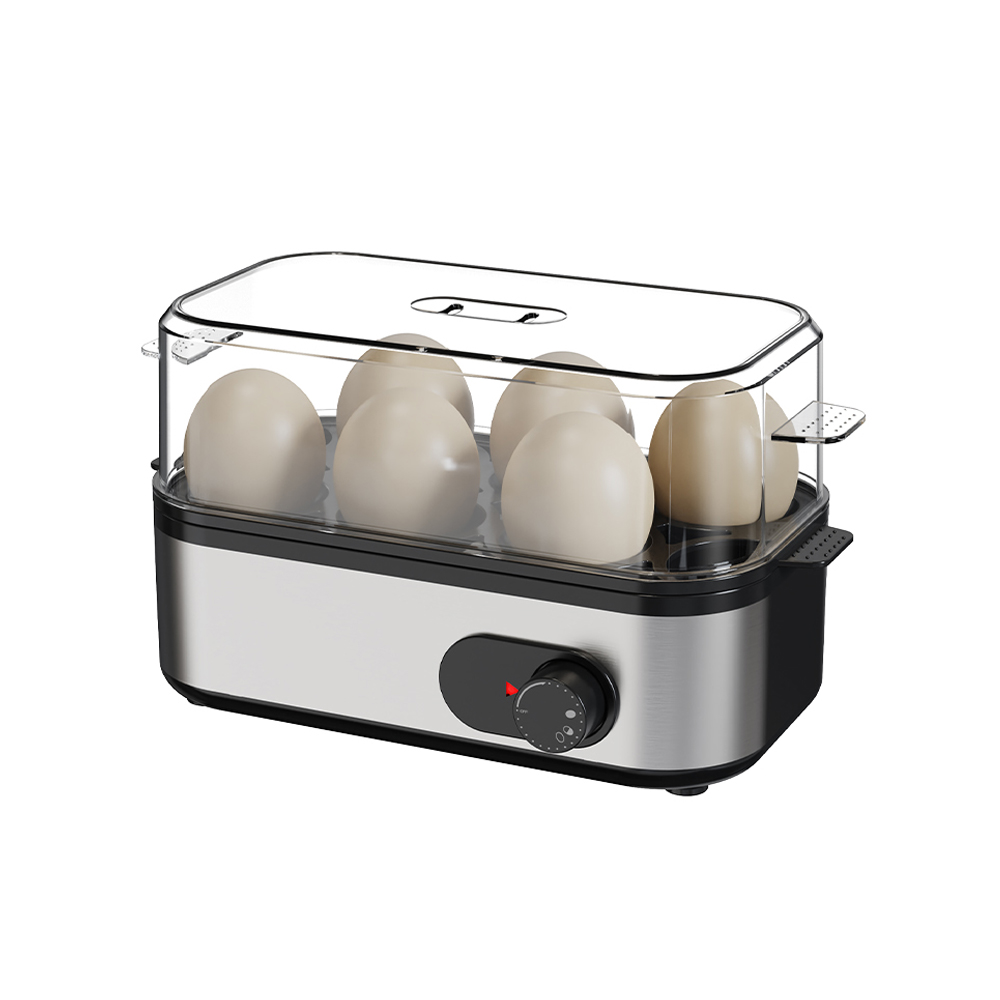 Electric Egg Cooker VS-E608T Double-Layer Large-Capacity Electric Egg Cooker
 -
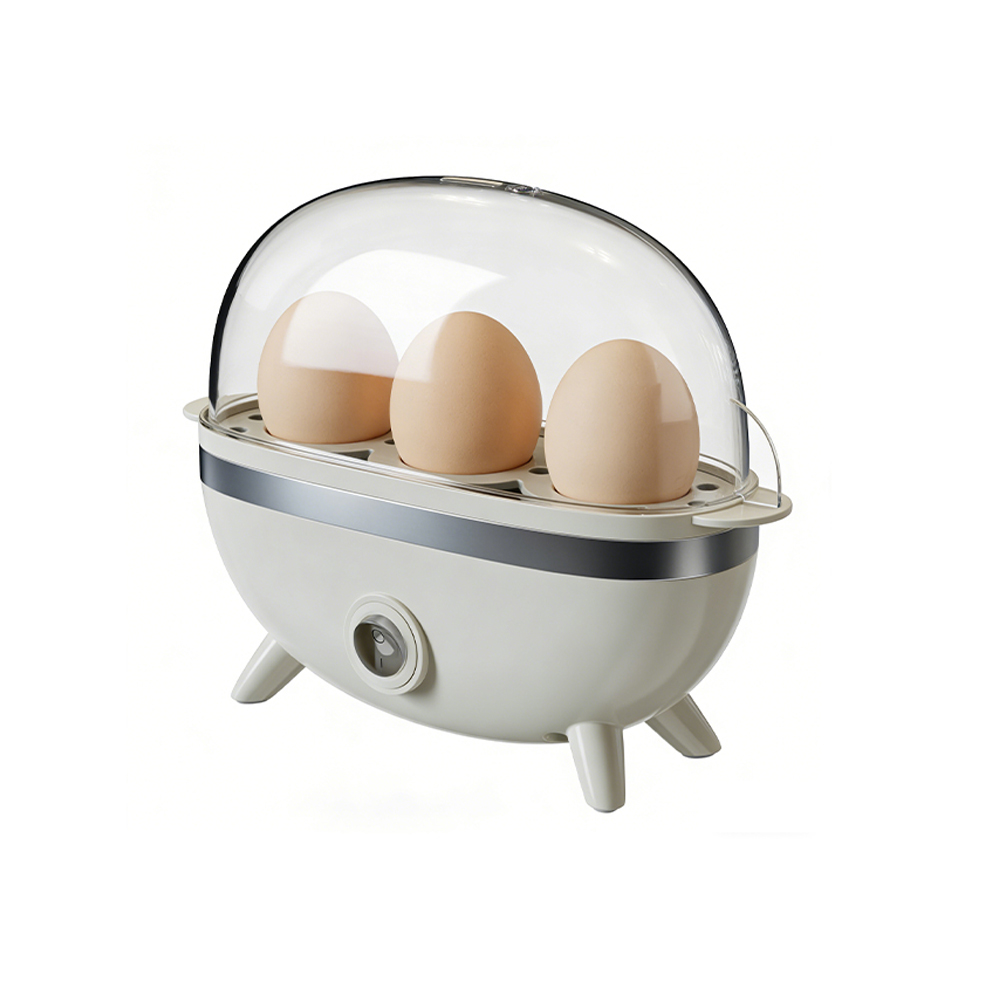 Electric Egg Cooker VS-E306 Small Household Electric Egg Cooker
 -
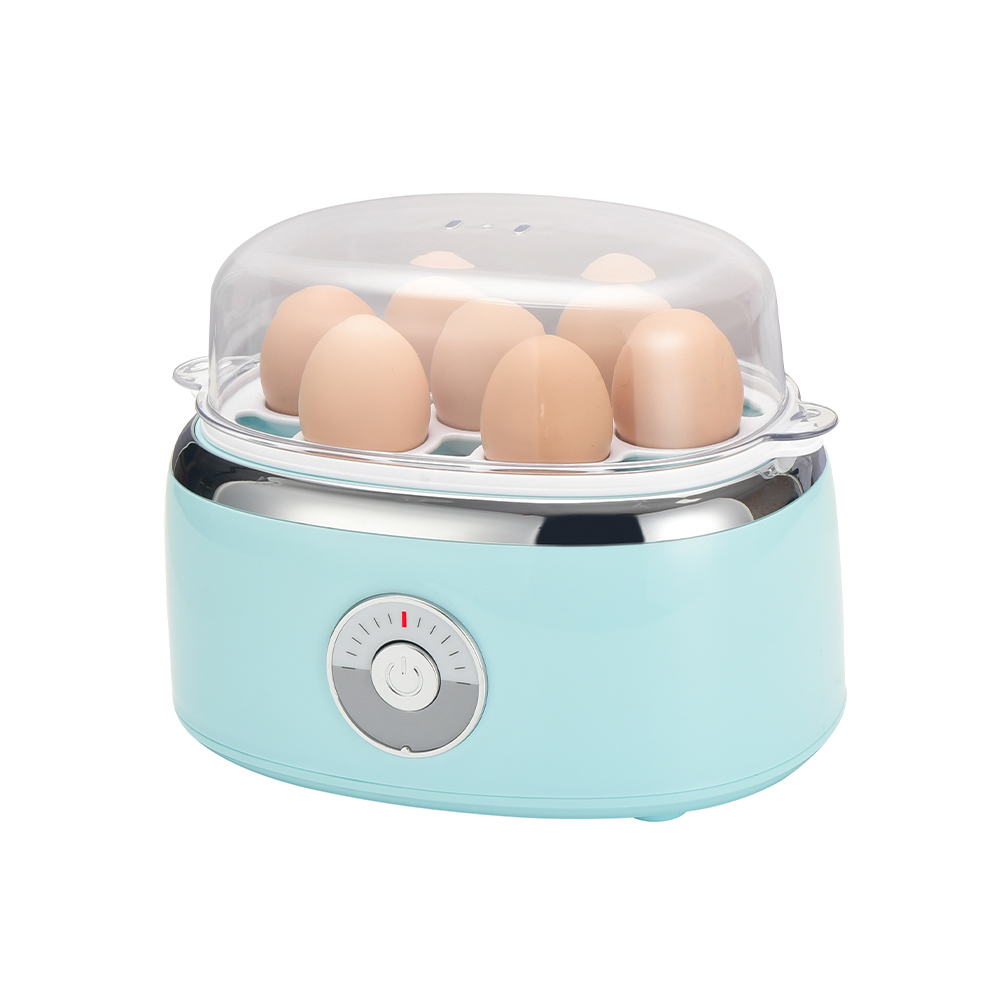 Electric Egg Cooker VS-E17 Quick-Cooking Automatic Power-Off Electric Egg Cooker
 -
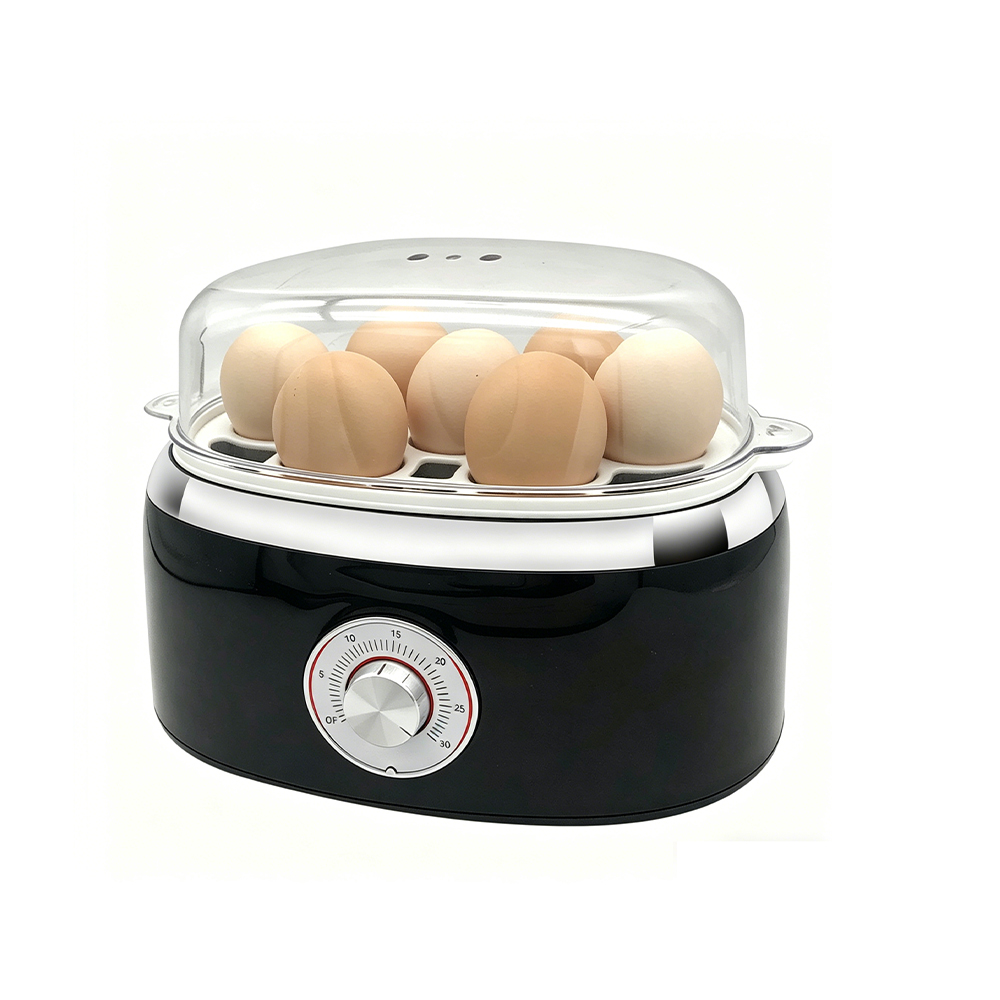 Electric Egg Cooker VS-E17T 7 Holes Electric Egg Cooker With Timer
 -
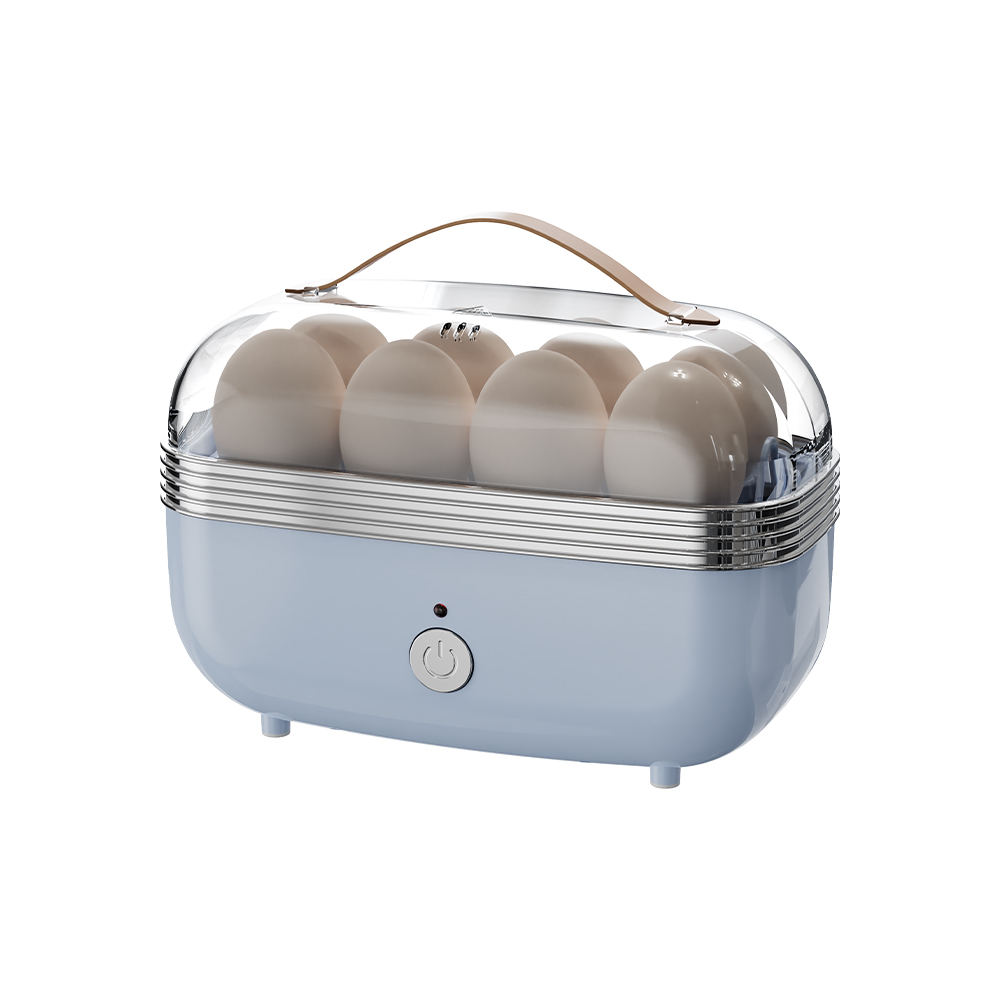 Electric Egg Cooker VS-E606 One-Touch Easy Electric Egg Cooker
 -
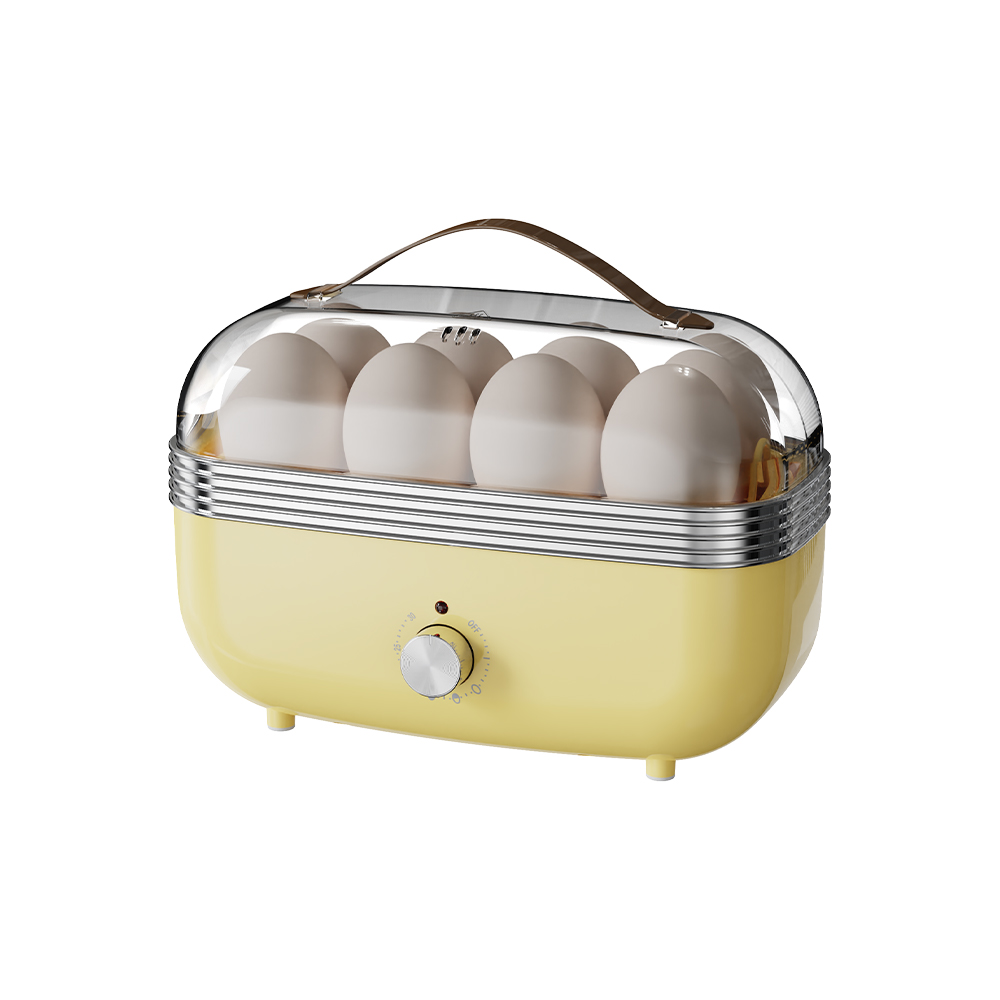 Electric Egg Cooker VS-E606T 450W Automatic Power-Off Electric Egg Cooker
 -
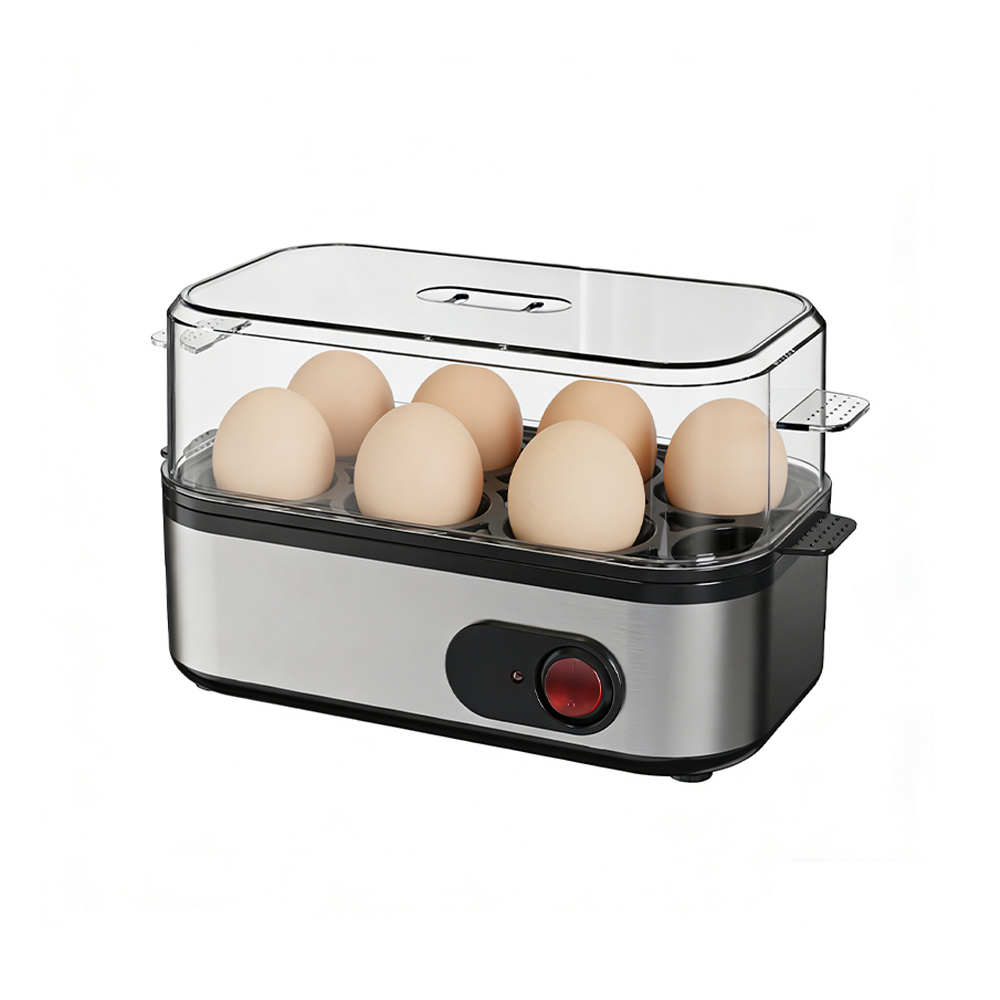 Electric Egg Cooker VS-E608 Stainless Steel Rotary Switch Electric Egg Cooker
 -
 Electric Pancake Machine VS-213 Automatic Temperature Adjustable Electric Pancake Machine
+86-13567417935
-
E-MAIL
-
ADDRESS
No.3 Sitang Jiang Road, Gaoqiao Vllage, Xinpu Town, Cixi City, Zhejiang Province, PRC. China.
Copyright © Ningbo Vasion Electric Appliance Co. ,Ltd.All Rights Reserved.
Custom Small Kitchen Appliances Manufacturers

VASION ELECTRIC
