 Language
 English
 中文简体
中文简体 русский
 Español
 عربى
عربى



Food Dehydrator vs Oven vs Freeze Dryer: What Actually Preserves Food Best
Content
- 1 What a Food Dehydrator Does Differently From an Oven
- 2 Food Dehydrator vs Oven Drying vs Freeze Drying
- 3 Horizontal Airflow vs Vertical Airflow Dehydrators
- 4 Temperature Settings by Food Type
- 5 Capacity and Tray Count: Matching the Machine to Actual Use
- 6 Energy Consumption and Long-Term Operating Cost
- 7 Nutrient Retention and Food Safety Considerations
- 8 Noise Levels and Build Materials
- 9 Best Uses by Food Category
- 10 Maintenance and Cleaning That Extends Machine Life
- 11 Features That Matter Most to Serious Buyers
- 12 Frequently Asked Questions
A food dehydrator preserves food better than an oven and more affordably than a freeze dryer, making it the practical middle-ground choice for anyone regularly drying fruit, vegetables, herbs, or meat at home. Ovens struggle to hold consistently low temperatures and waste far more energy doing it, while freeze dryers cost several times more and are overkill for casual or even semi-serious home food preservation. The right choice still depends on volume, budget, and how long you need the finished food to last.
What a Food Dehydrator Does Differently From an Oven
Drying food is about removing moisture slowly and evenly enough that bacteria and mold can't take hold, without cooking the food outright. A food dehydrator is purpose-built for this: it holds a steady low temperature, usually between 95°F and 165°F, and circulates air continuously across every tray. Most home ovens can't reliably hold below 170°F, and even when set to their lowest temperature, they cycle on and off in ways that create hot and cool swings of 20°F or more — enough to case-harden the outside of food while leaving the inside still moist.
Airflow matters just as much as temperature. A dehydrator's fan moves air across every shelf, so moisture pulled out of the food gets carried away rather than trapped inside a closed oven cavity. This is the main reason a batch of sliced apples in a dehydrator dries evenly in 6 to 8 hours, while the same batch in an oven often finishes unevenly and takes noticeably longer per pound processed, especially if the oven door has to be propped open to let moisture escape.
Energy use compounds the difference. An oven pulls 2,000 to 5,000 watts to maintain temperature, compared to 400 to 1,000 watts for most home food dehydrators. Running a dehydrator for an 8-hour drying cycle typically costs a fraction of what the same duration would cost in an oven, which matters more than it seems once someone is dehydrating regularly rather than as an occasional project.
Food Dehydrator vs Oven Drying vs Freeze Drying
| Factor | Food Dehydrator | Oven Drying | Freeze Drying |
| Typical equipment cost | $50 – $400 | Already owned | $2,000 – $4,500+ |
| Moisture removed | Roughly 90% to 95% | Roughly 80% to 90%, less consistent | Up to 98% to 99% |
| Shelf life of finished food | 6 months to 1 year, properly stored | 3 to 6 months, more variable | 15 to 25+ years, properly sealed |
| Nutrient retention | Good, low-heat process preserves most vitamins | Lower, higher heat degrades more nutrients | Excellent, minimal heat exposure |
| Texture of finished food | Chewy to crisp depending on food and setting | Often uneven, can be leathery or overly hard | Light, crisp, rehydrates close to original texture |
| Processing time per batch | 4 to 12 hours depending on food | Similar or longer, less predictable | 18 to 40 hours per cycle |
| Energy cost per cycle | Low, 400-1,000 watt draw | Higher, 2,000-5,000 watt draw | Highest, long cycles and vacuum pump draw |
Freeze drying wins on shelf life and texture by a wide margin, which is why serious long-term food storage buyers eventually consider it. But the price gap is large enough that a food dehydrator remains the more sensible entry point for most households, and even many small-scale producers, especially when food will be consumed within a year rather than stored for decades.
Horizontal Airflow vs Vertical Airflow Dehydrators
Once someone decides a food dehydrator is the right tool, the next real decision is airflow direction, which affects drying evenness far more than most buyers expect going in.
| Factor | Horizontal Airflow (Rear-Mounted Fan) | Vertical Airflow (Bottom or Top Fan) | |
| Drying evenness across trays | Very even, no tray rotation usually needed | Less even, flavors and liquids can drip between trays | |
| Cross-contamination of flavors | Minimal, air passes horizontally across each tray separately | More likely, especially drying meat and fruit simultaneously | |
| Typical price range | $150 – $400+ | $40 – $150 | |
| Capacity expandability | Usually fixed tray count | Often stackable, easy to add trays | |
| Best suited for | Jerky, mixed batches, frequent or serious use | Occasional use, herbs, small fruit batches |
Vertical airflow dehydrators tend to be less expensive and more compact, which appeals to first-time buyers testing out home food preservation. But the tradeoff is real: liquids and strong flavors from one tray can drip onto the tray below, and food closer to the fan often dries faster than food further away, requiring trays to be rotated partway through a cycle. Horizontal airflow models solve this by pushing air evenly across every shelf from the back, which is why most people drying jerky, mixed vegetable batches, or anything in higher volume eventually upgrade to a horizontal model.
Temperature Settings by Food Type
Getting the temperature right is the single biggest factor in both food safety and final texture. A few reference points that consistently show up in food preservation guidance:
- Herbs — 95°F to 115°F, low and slow to preserve essential oils and aroma
- Fruit — 125°F to 135°F, balances drying speed with nutrient and flavor retention
- Vegetables — 125°F to 135°F, similar range to fruit for most produce
- Meat for jerky — 155°F to 165°F, high enough to address food safety concerns around bacteria during the drying process
- Nuts and seeds — 115°F to 125°F, low heat prevents oils from turning rancid during drying
A food dehydrator with precise digital temperature control, ideally adjustable in small increments rather than broad presets, gives far more consistent results across these categories than a unit with only a handful of fixed settings.
Capacity and Tray Count: Matching the Machine to Actual Use
Tray count is often the first spec buyers look at, but usable square inches per tray matters more than the number printed on the box. A 6-tray dehydrator with small, shallow trays can hold less usable food than a 4-tray unit with larger, well-spaced shelves.
| Household Type | Recommended Capacity |
| Occasional use, herbs and small snack batches | 4 to 5 trays |
| Regular home use, family snacking and meal prep | 6 to 8 trays |
| Garden harvest processing, bulk preservation | 9+ trays or stackable expandable models |
| Small-scale producers or resale | Commercial-grade units, 15+ trays |
Buyers who grow their own produce, especially anyone processing a full garden harvest in a short window during peak season, consistently underestimate how much tray space they'll actually need. A dehydrator with expandable tray capacity — where additional trays can be purchased and added to an existing unit — often ends up being the more cost-effective long-term purchase than buying a smaller model and later replacing it entirely.
Energy Consumption and Long-Term Operating Cost
Because drying cycles run for hours at a time, wattage differences between models add up. A 600-watt dehydrator running an 8-hour cycle uses considerably less electricity than a 1,000-watt model running the same duration, and the gap widens further for anyone dehydrating multiple batches a week. Buyers processing food regularly — several batches weekly during harvest season, for instance — often find that a slightly more expensive, energy-efficient dehydrator pays for the price difference within a single season of heavy use.
Insulation quality also affects efficiency in ways that aren't always obvious from a spec sheet. A well-insulated dehydrator housing holds internal temperature more consistently, meaning the heating element cycles less often to maintain target temperature — similar in principle to how a well-insulated house uses less energy to hold a set indoor temperature.
Nutrient Retention and Food Safety Considerations
Low, consistent heat is what makes a food dehydrator gentler on nutrients than an oven. Vitamin C and several B vitamins are heat-sensitive and degrade faster at higher temperatures, so the lower, steadier heat range of dehydrating — generally under 135°F for produce — retains meaningfully more of these nutrients than high-heat oven drying, where uneven hot spots can push localized temperatures well above what a dehydrator ever reaches.
Food safety is the other side of this equation, particularly for meat. Jerky needs to reach an internal temperature high enough to eliminate harmful bacteria, which is why dehydrators used for meat should support settings up to at least 160-165°F, and many food safety guidelines recommend pre-cooking meat to a safe internal temperature before dehydrating rather than relying on the dehydrator's heat alone. A dehydrator without adequate high-temperature range simply isn't suited for jerky-making regardless of how well it performs on fruit or vegetables.
Noise Levels and Build Materials
Fan noise is a common complaint that rarely shows up in product marketing. Because drying cycles often run 6 to 12 hours, sometimes overnight, a dehydrator that runs at 60+ decibels can be genuinely disruptive in a kitchen near living or sleeping spaces, while quieter models operate closer to 40-50 decibels — a noticeable difference for anyone planning to run cycles overnight regularly.
Build material affects both durability and food safety. BPA-free plastic trays are now standard on most reputable models, but stainless steel trays and housings, while pricier, resist odor absorption and staining better over years of heavy use — a detail that matters more to buyers planning to dehydrate strong-smelling foods like garlic, onions, or fish jerky regularly.
Best Uses by Food Category
A food dehydrator earns its keep across a wider range of uses than most first-time buyers expect:
- Fruit leather and dried fruit snacks — apples, bananas, and berries dry into shelf-stable snacks without added preservatives
- Vegetable chips and soup mixes — kale, zucchini, and tomatoes dry into crisp snacks or rehydrate well in soups and stews
- Jerky and dried meats — beef, turkey, and venison jerky, with proper pre-cooking and high-temperature settings
- Herbs and spice blends — basil, oregano, and mint dry quickly at low heat and retain aroma far better than air-drying
- Pet treats — dehydrated sweet potato, chicken, or liver treats, an increasingly popular use among pet owners wanting more control over ingredients
- Backpacking and camping meals — dehydrated fruits, vegetables, and pre-cooked meals significantly reduce pack weight for hikers
Maintenance and Cleaning That Extends Machine Life
Trays and mesh liners should be cleaned after every use to prevent residue buildup, which over time can affect airflow and introduce off-flavors into future batches. Removable trays that are dishwasher-safe save meaningful time for anyone dehydrating frequently, while the housing and fan area typically only need periodic wiping since they rarely contact food directly. Checking and cleaning the fan vent every few months prevents dust buildup that can reduce airflow efficiency and, over time, force the heating element to work harder to maintain set temperatures.
Features That Matter Most to Serious Buyers
Buyers who dehydrate regularly, whether for home food storage, gardening harvests, or small-batch resale, tend to prioritize a specific set of features once they've moved past their first basic unit:
- Digital timers with auto shut-off — allows unattended overnight drying without risk of over-drying or running the unit longer than necessary
- Precise adjustable thermostats — rather than a handful of fixed presets, fine temperature control in 5°F increments supports a much wider range of foods
- Expandable tray systems — lets capacity grow with need rather than requiring a full replacement purchase later
- Even horizontal airflow design — reduces the need for tray rotation and shortens overall drying time for large batches
- Clear or see-through doors — lets users monitor drying progress without opening the unit and losing heat and humidity control
- Warranty length — a longer warranty, typically 1 to 5 years depending on the manufacturer, is often a reasonable proxy for build quality and expected component lifespan
None of these features are strictly necessary for occasional, casual dehydrating. But for anyone processing food regularly enough to justify a serious kitchen appliance budget, these details tend to separate a food dehydrator that gets used for years from one that ends up in storage after a single season.
Frequently Asked Questions
What temperature should a food dehydrator be set to?
It depends on the food. Herbs dry best around 95°F to 115°F, fruit and vegetables around 125°F to 135°F, and meat for jerky should reach 155°F to 165°F to address food safety concerns during the drying process.
How long does food last after being dried in a food dehydrator?
Properly dried and stored food typically lasts 6 months to a year in an airtight container kept in a cool, dark place. Vacuum sealing and refrigeration or freezing can extend that shelf life further.
Is a food dehydrator better than using an oven to dry food?
Generally yes. A food dehydrator holds a steadier low temperature and circulates air more evenly than most ovens, which produces more consistent results, better nutrient retention, and considerably lower energy costs over repeated use.
How many trays do I need in a food dehydrator?
Four to five trays suit occasional use like drying herbs or small snack batches, six to eight trays fit regular family use, and nine or more trays — or an expandable stackable model — suit anyone processing garden harvests or larger batches.
Do food dehydrators use a lot of electricity?
Not compared to an oven. Most home food dehydrators draw 400 to 1,000 watts, versus 2,000 to 5,000 watts for an oven, which adds up to meaningfully lower operating costs over an 8-hour or longer drying cycle.
-
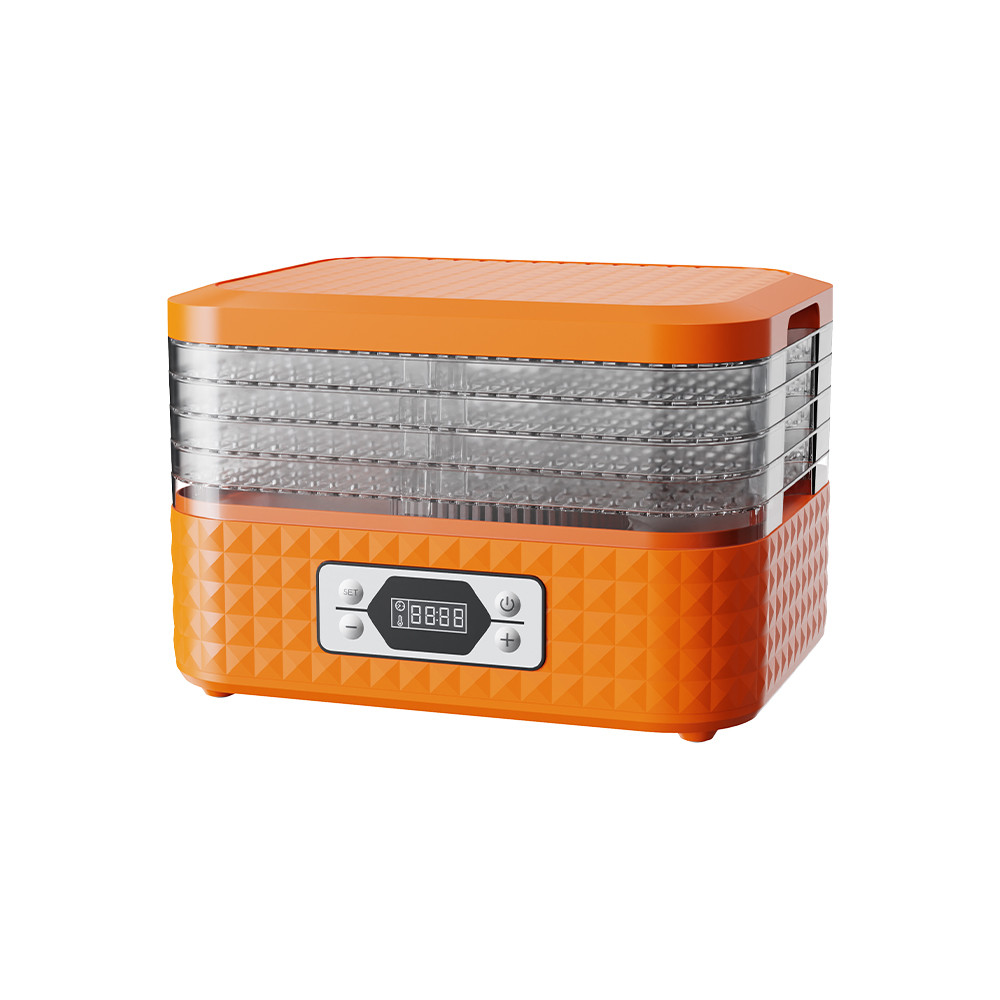 Food Dehydrator FD-688L 450W 5-8 Layer Tray Food Dehydrator
 -
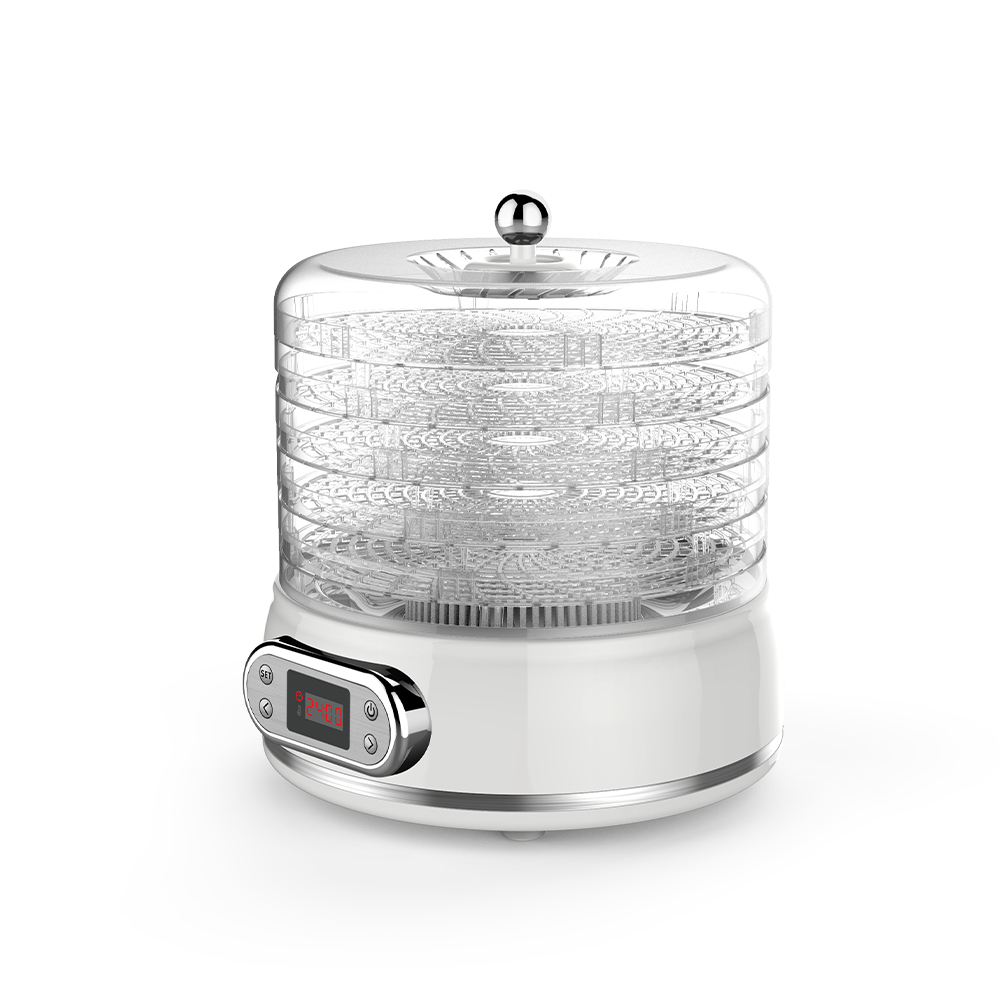 Food Dehydrator FD-817L Easy-To-Use Knob-Controlled Food Dehydrator
 -
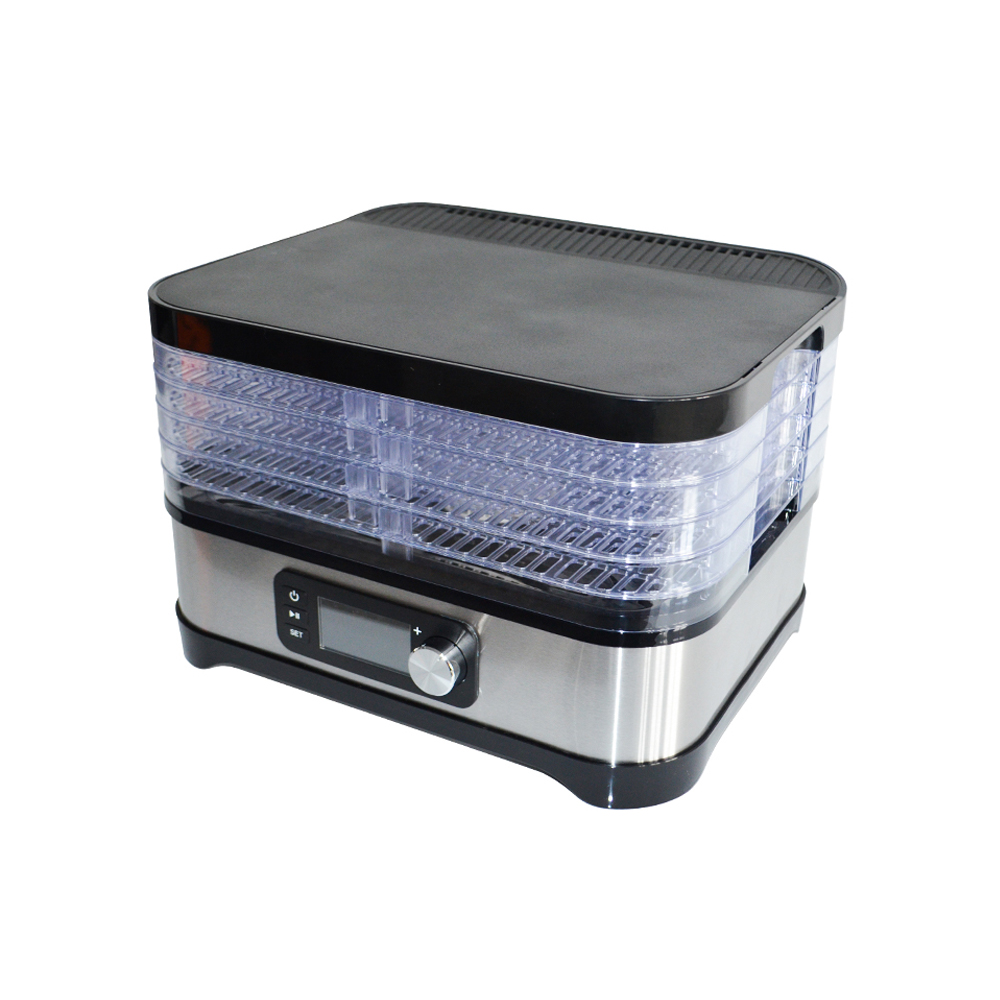 Food Dehydrator FD-996P Digital LED Display Screen Food Dehydrator
 -
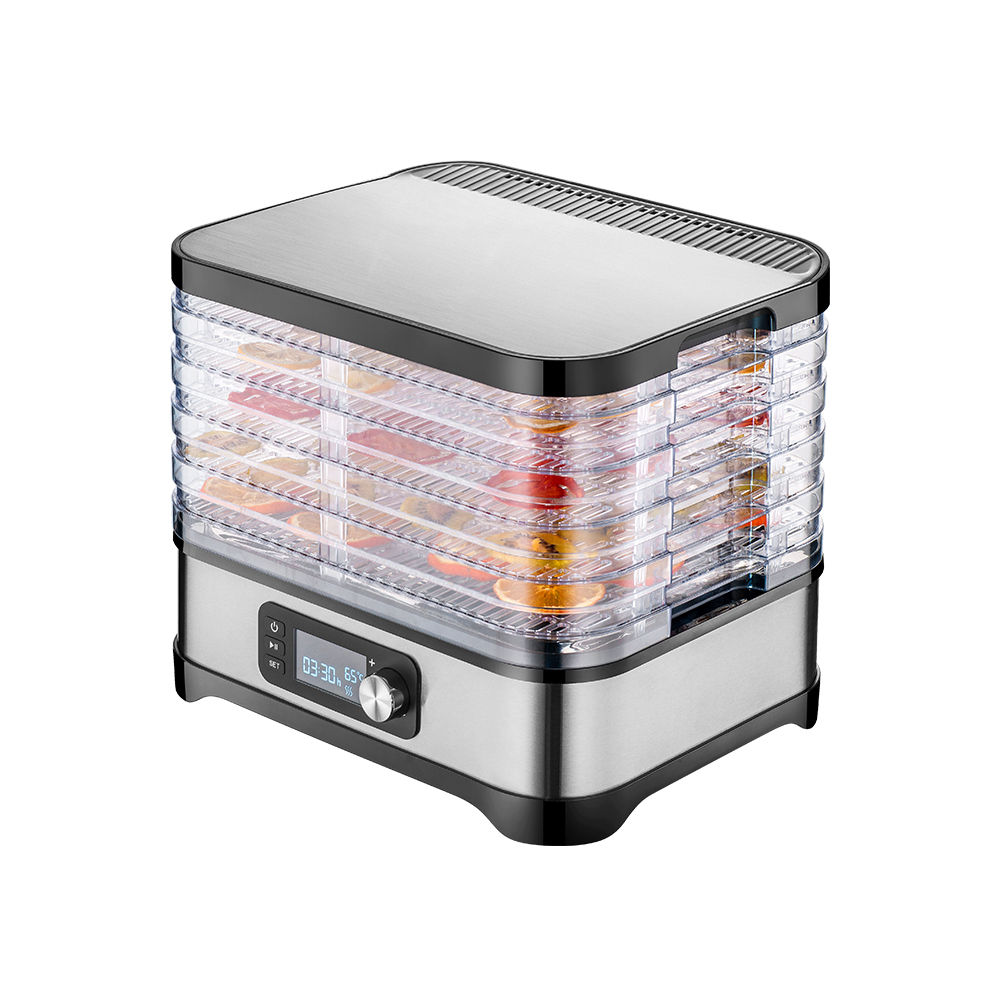 Food Dehydrator FD-996 5 Stackable Tier AS Trays Food Dehydrator
 -
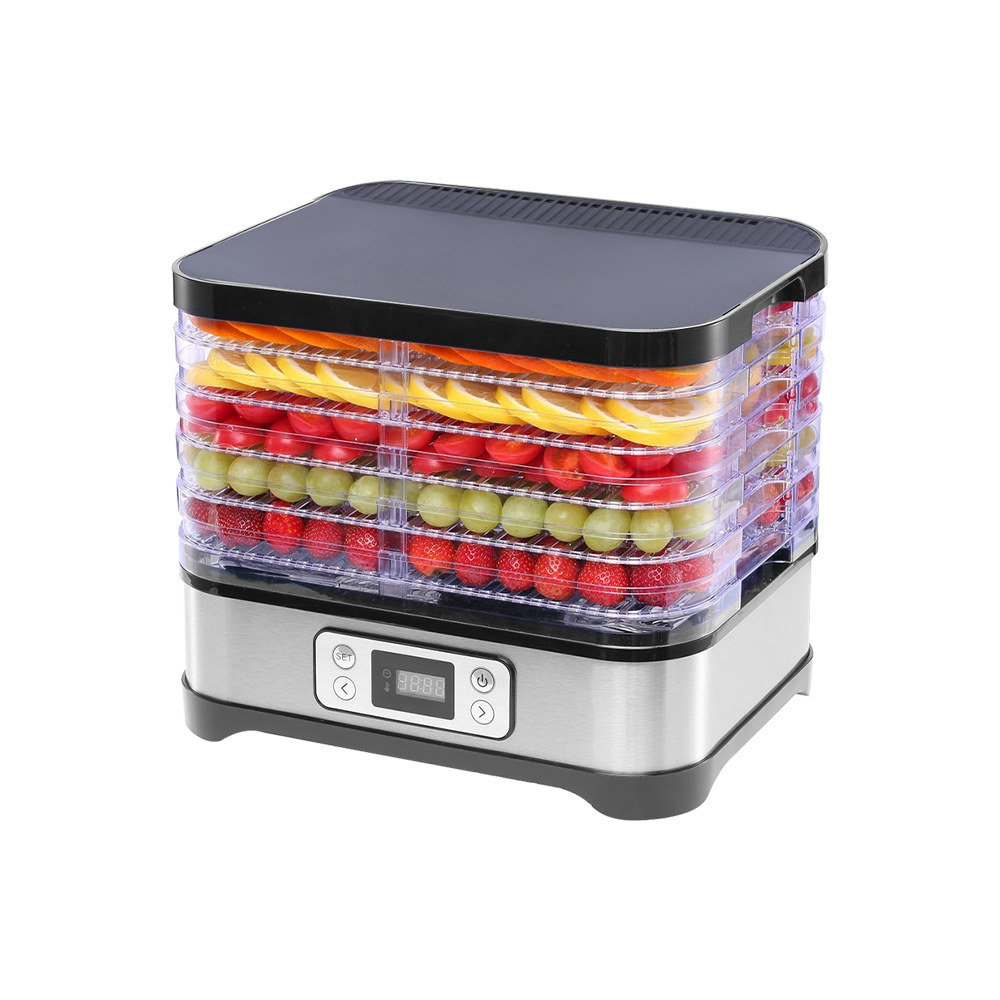 Food Dehydrator FD-811L Stainless Steel Food Dehydrator
 -
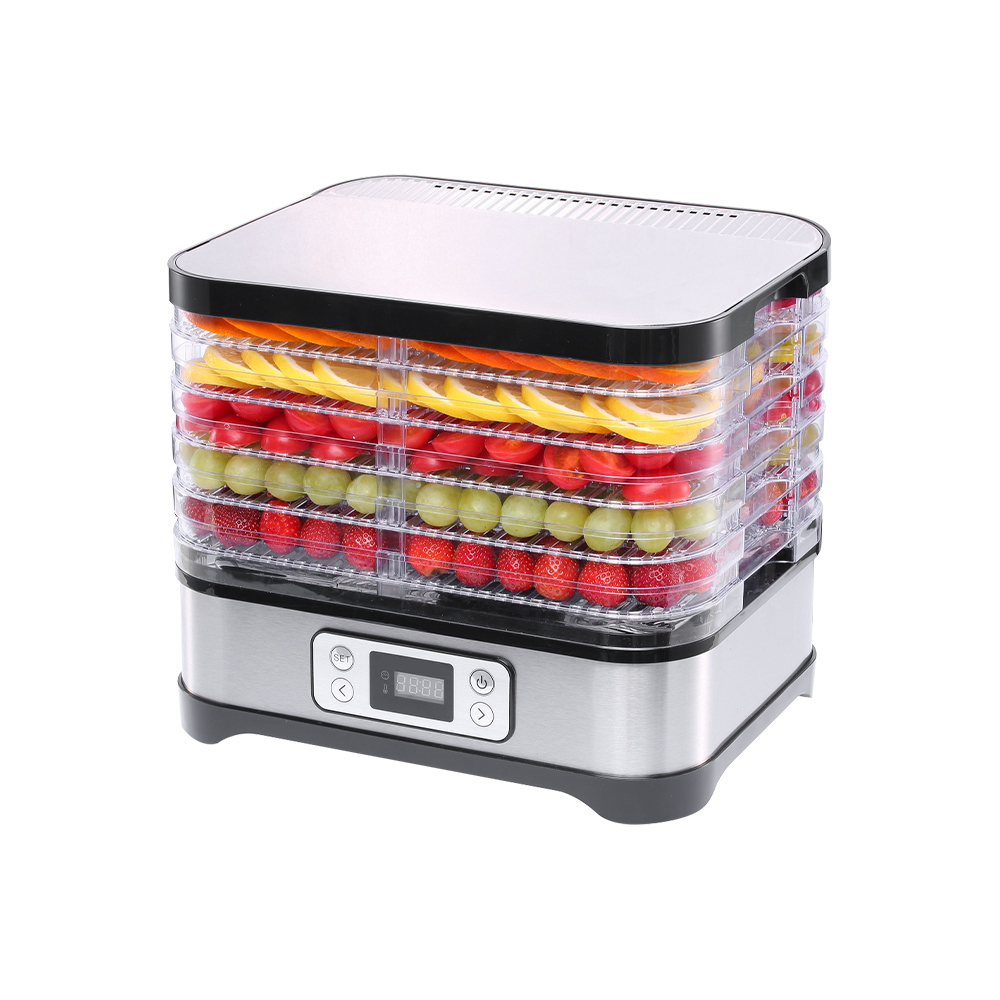 Food Dehydrator FD-812L Adjustable Temperature Food Dehydrator
 -
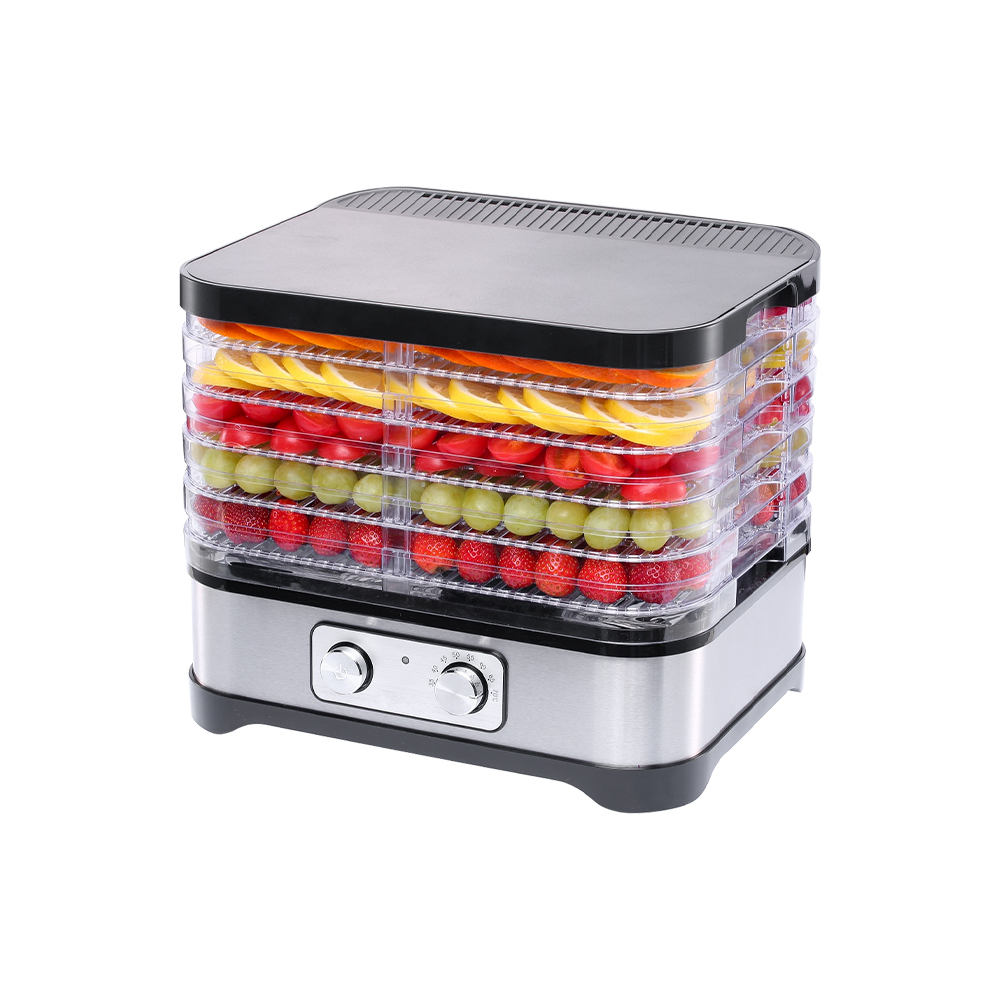 Food Dehydrator FD-812 Food And Fruit Dehydrator With Mechanical Knob
 -
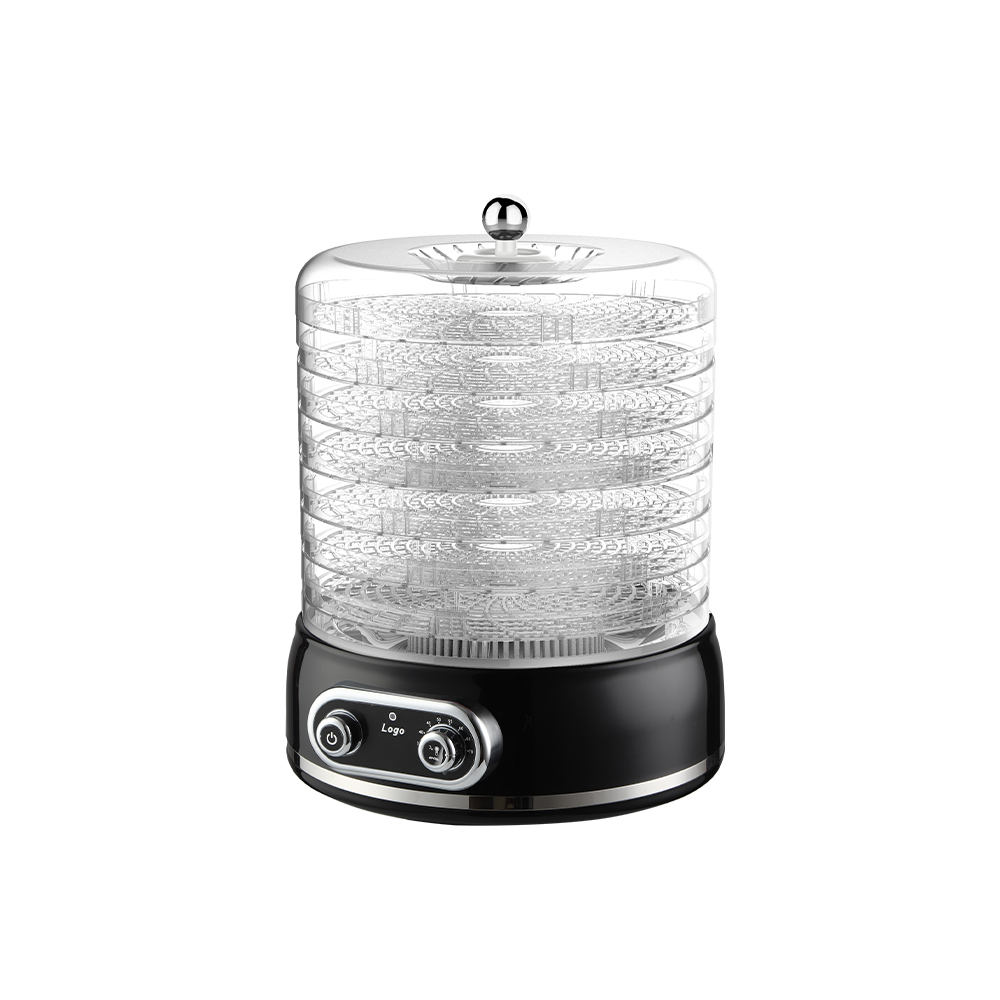 Food Dehydrator FD-817 Digital Multi-Layer Home Electric Food Dehydrator
+86-13567417935
-
E-MAIL
-
ADDRESS
No.3 Sitang Jiang Road, Gaoqiao Vllage, Xinpu Town, Cixi City, Zhejiang Province, PRC. China.
Copyright © Ningbo Vasion Electric Appliance Co. ,Ltd.All Rights Reserved.
Custom Small Kitchen Appliances Manufacturers

VASION ELECTRIC
