Language
 English
 中文简体
中文简体 русский
 Español
 عربى
عربى



Kitchen Appliance Buying Guide
A practical guide to matching air fryer size and wattage to your household, your cooking habits, and your kitchen space.
Quick Answer
For most people, the right air fryer is a 4 to 6 quart basket model with 1500 to 1800 watts of power. This size comfortably feeds two to four people, cooks a whole chicken or a full tray of vegetables, and heats up fast enough for weeknight meals. If you live alone or have very limited counter space, a 2 to 3 quart model with 1000 to 1400 watts is enough. If you regularly cook for five or more people, look at 8 quart and larger models, or a dual basket design, paired with 1700 to 1800 watts so cooking time does not stretch out with the larger load.
The rest of this guide explains why these numbers matter, how capacity and power work together, and how to avoid the most common buying mistakes.
Understanding Air Fryer Capacity What Size Do You Actually Need
Capacity is measured in quarts or liters and describes the volume of the cooking basket, not the total size of the appliance. This distinction matters because two air fryers with the same listed capacity can have very different usable cooking space depending on the shape of the basket. A wide, shallow basket lets hot air circulate more evenly than a narrow, deep one, so food often cooks more consistently even when the stated capacity is identical.
Capacity should be chosen based on how many people you cook for on a typical day, not on the biggest meal you might occasionally prepare. Buying a larger unit than you need does not just take up more counter space, it also often takes longer to preheat and can cook smaller portions unevenly because the food sits far from the heating element.
Capacity Guide by Household Size
| Household Size | Recommended Capacity | Typical Meal Example |
| 1 person | 2 to 3 quarts | One chicken breast and a side of vegetables |
| 2 people | 3 to 4 quarts | Two portions of salmon with roasted potatoes |
| 3 to 4 people | 5 to 6 quarts | A whole chicken or a full tray of fries for the family |
| 5 or more people | 8 quarts or dual basket models | Two proteins and a vegetable side cooked at once |
A useful rule of thumb comes from most manufacturer guidance: allow roughly 1 quart of capacity per person for a standard meal, then add 1 to 2 quarts of buffer if you frequently cook bulky items such as whole poultry, large trays of vegetables, or foods that should not be stacked, like breaded items and fries. Overcrowding the basket is the single most common reason people complain that their air fryer does not produce crispy results, since packed food steams instead of roasting.
Understanding Power Output How Wattage Affects Cooking
Power output, measured in watts, determines how quickly an air fryer heats up and how well it maintains temperature once food is added. Most home air fryers on the market range from around 800 watts on the smallest compact models to 1800 watts on larger family sized units. Higher wattage generally means faster preheating and a shorter recovery time after the basket door is opened, which matters when you are shaking or flipping food partway through cooking.
Wattage should scale with capacity. A large basket paired with low wattage struggles to circulate enough hot air to reach every corner of the food, which leads to uneven browning. As a general guideline, look for at least 1400 watts for a 4 to 5 quart model and 1700 to 1800 watts for anything 6 quarts or larger.
Recommended Wattage by Capacity
| Basket Capacity | Minimum Recommended Wattage | Approximate Preheat Time |
| 2 to 3 quarts | 900 to 1200 watts | 2 to 3 minutes |
| 4 to 5 quarts | 1400 to 1500 watts | 3 to 4 minutes |
| 6 to 8 quarts | 1700 to 1800 watts | 4 to 5 minutes |
Higher wattage does increase electricity draw, but the actual cost impact is small. Running an 1800 watt air fryer for 20 minutes uses about 0.6 kilowatt hours. At an average residential electricity rate of around 15 cents per kilowatt hour, that is roughly 9 cents per cooking session, which is generally lower than using a full sized oven for the same task because the smaller chamber heats up faster and uses less total energy over the cook.
How Capacity and Power Work Together
Capacity and wattage should never be evaluated separately. A common mistake is choosing a large basket to avoid cooking in batches, then discovering that the unit takes much longer to reach temperature and produces soggier results because the wattage was not built for that volume of food. The heating element and fan need enough power to move hot air through the entire basket within a few seconds of the door closing, and that requirement grows as the basket gets larger.
A helpful way to think about it is the power to capacity ratio. Dividing wattage by quart capacity gives a rough sense of how well equipped a unit is for its size.
Power to Capacity Ratio Examples
| Model Type | Watts per Quart | Assessment |
| 3 quart at 1000 watts | Approximately 333 | Well matched for a compact single serving unit |
| 6 quart at 1500 watts | 250 | Adequate but may run slightly slower on full loads |
| 8 quart at 1750 watts | Approximately 219 | Reasonable for a family sized unit designed for larger loads |
As a general benchmark, aim for a ratio above 220 watts per quart for consistent, evenly browned results. Below that, cooking times listed in recipes tend to run long and food near the edges of the basket may finish before the center does.
Factors Beyond Capacity and Power Worth Checking
Capacity and wattage are the two most important specifications, but a few other factors influence whether an air fryer fits well into daily use.
Basket Shape and Design
Wide, shallow baskets circulate air more evenly than tall narrow ones and are generally better for foods like fries and vegetables that need to be spread in a single layer.
Dual Basket or Multi Zone Models
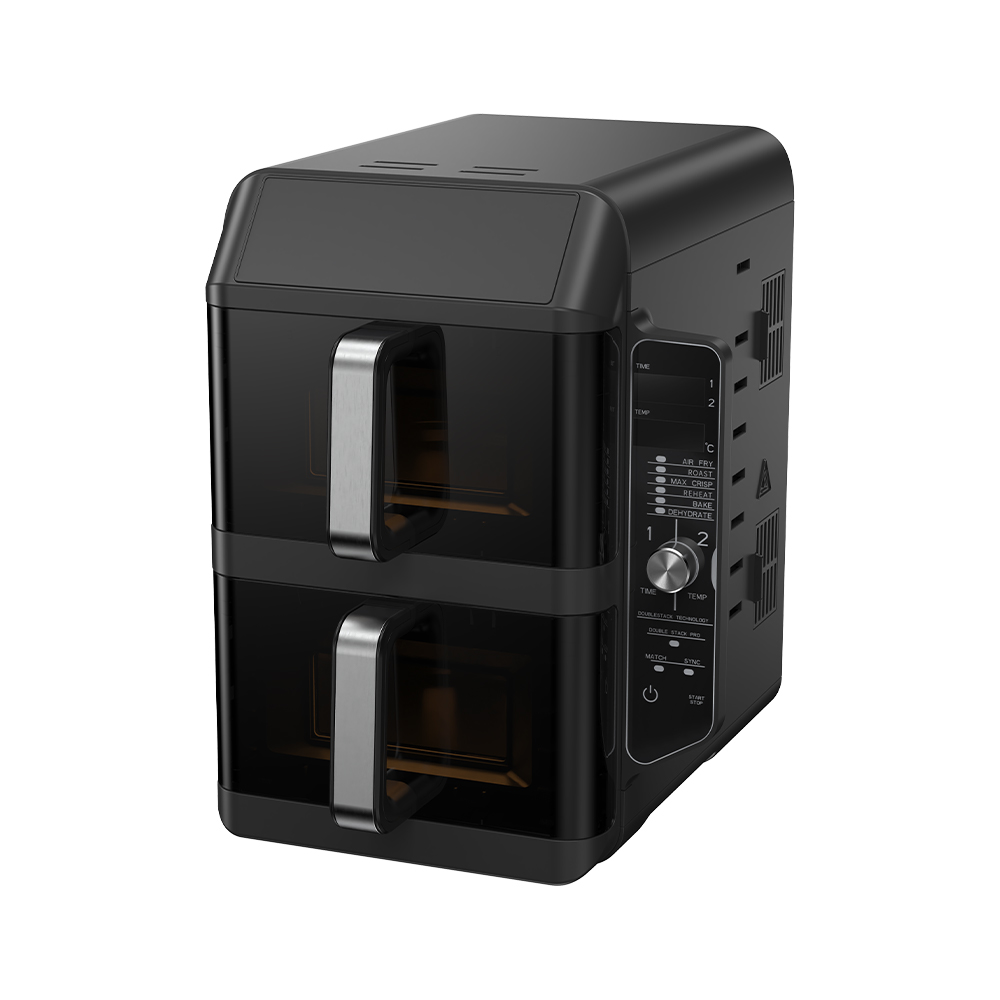
These allow two different foods to cook at different temperatures at the same time, which is useful for larger households that want to prepare a full meal in one appliance without batching.
Countertop Footprint and Storage
Larger baskets require taller housings for the fan and heating element, so an 8 quart model can take up considerably more counter and cabinet space than the quart difference alone suggests. Measure your available space before buying.
Controls and Presets
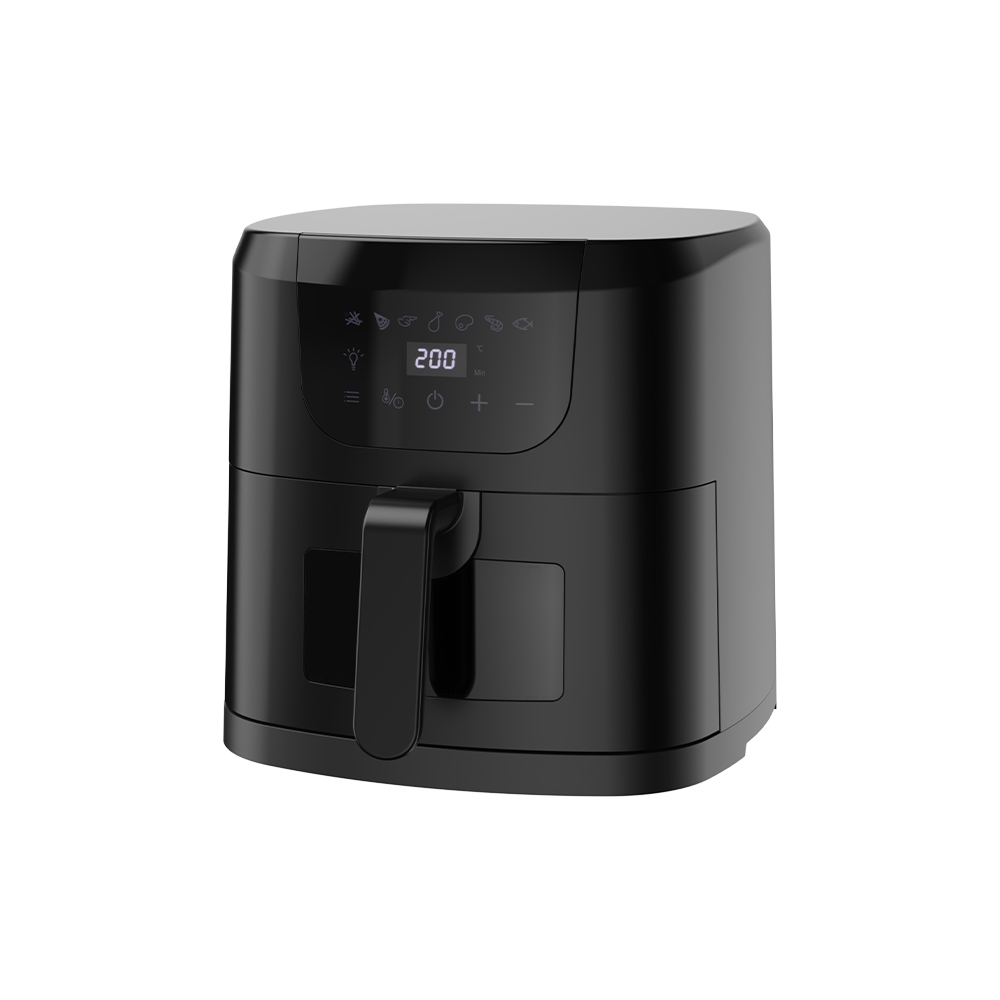
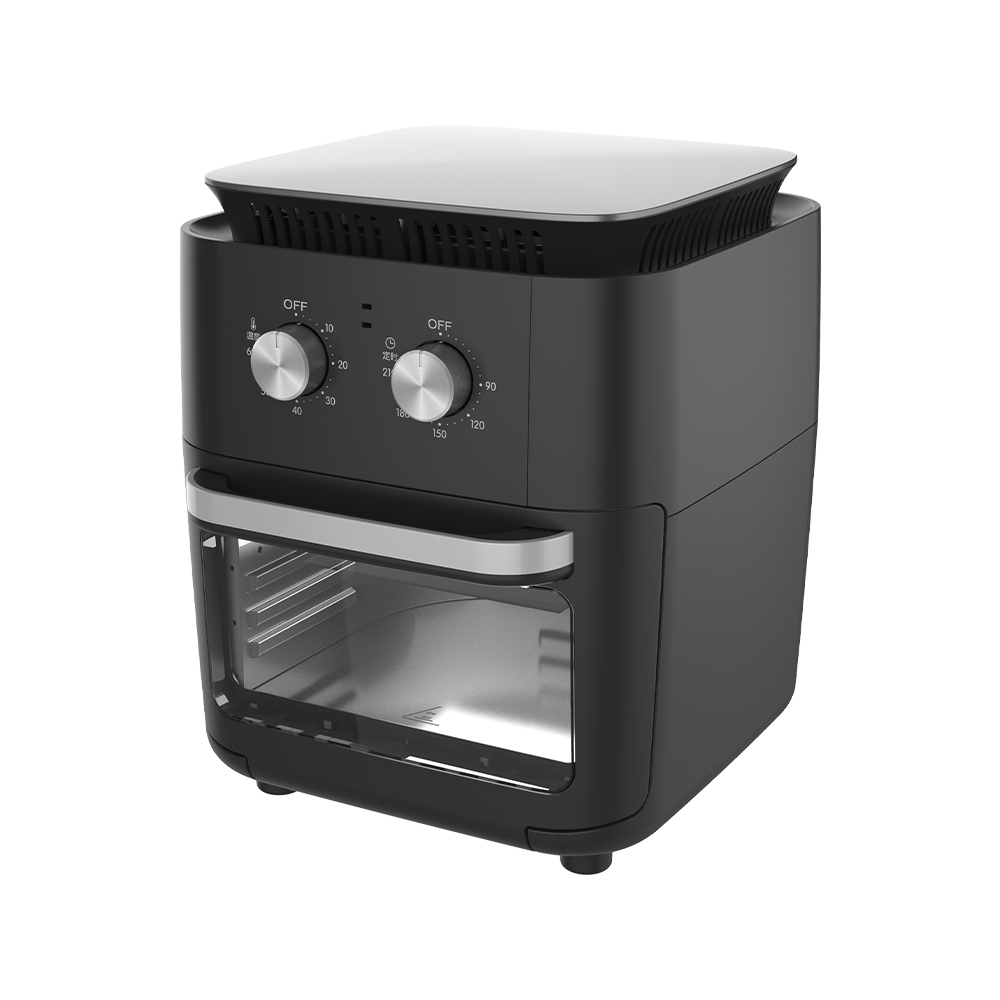
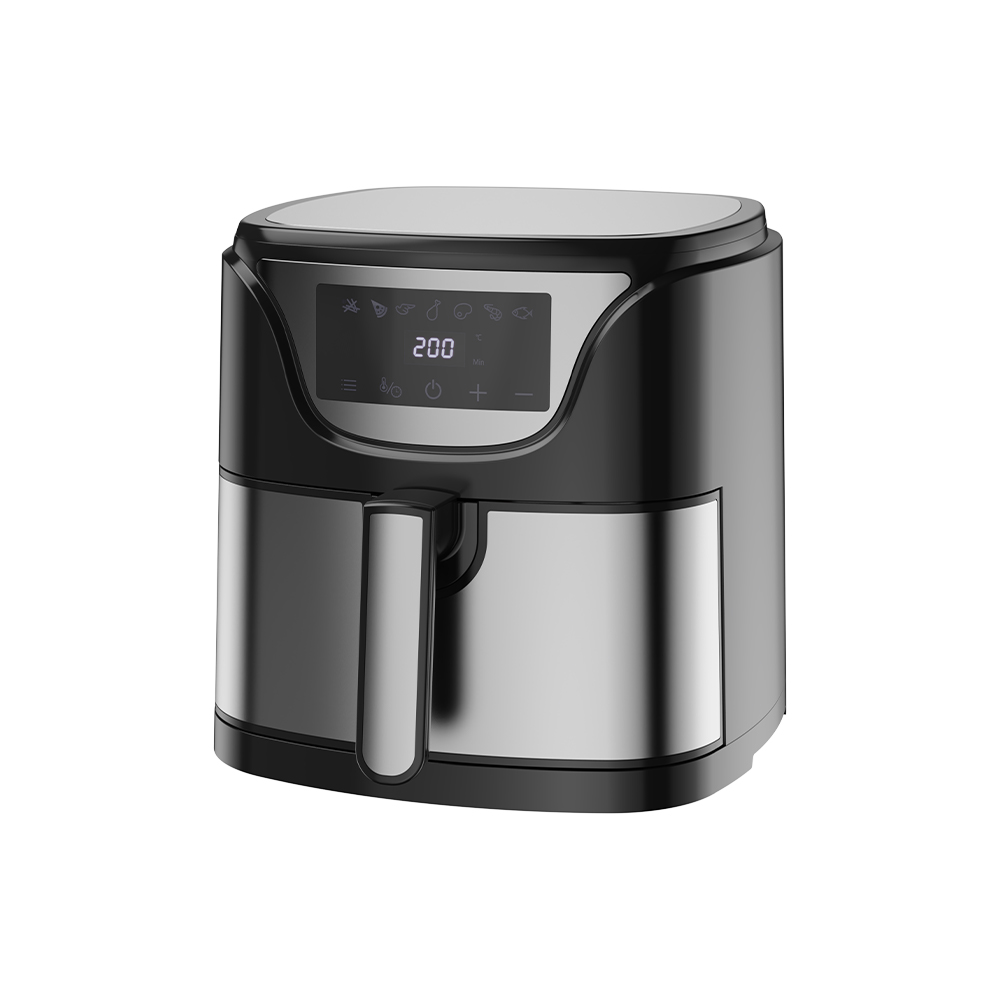
Dial controls are simple and durable, while digital touch panels often include presets for common foods. Presets are convenient but are not a substitute for checking food doneness, especially with new recipes.
Noise Level
Higher wattage units often use stronger fans, which can be noticeably louder. If the appliance will run near a shared living space, check reviews that mention decibel levels or noise specifically.
Common Mistakes When Choosing an Air Fryer
Most buyer regret comes from a small set of avoidable errors.
- Buying based on the largest meal you might someday cook, rather than your typical daily needs, which results in an oversized appliance that is slower and less efficient for everyday portions.
- Choosing a large basket with low wattage, which leads to long cook times and uneven results because the heating system cannot keep up with the volume of food.
- Overlooking counter and storage space, especially cabinet height, since many family sized models do not fit under standard upper cabinets when the lid is open.
- Ignoring basket shape and assuming all baskets of the same quart rating perform the same, when shallow wide baskets consistently outperform tall narrow ones for crisping.
- Not checking dishwasher safe parts, which affects daily cleanup time far more than most buyers expect before their first week of use.
Recommended Configurations by Use Case
The table below summarizes practical combinations of capacity and wattage for common lifestyles.
| Use Case | Capacity | Wattage | Notes |
| Small apartment single serving | 2 to 3 quarts | 900 to 1200 watts | Prioritize a compact footprint over extra capacity |
| Couple or small household | 3 to 4 quarts | 1300 to 1500 watts | Good balance of speed and everyday portion size |
| Family with children | 5 to 6 quarts | 1500 to 1700 watts | Consider a dual basket model for cooking two items together |
| Meal prep or batch cooking | 7 to 8 quarts or larger | 1700 to 1800 watts | Confirm cabinet clearance before purchase |
Frequently Asked Questions
Is a bigger air fryer always better
No. A larger basket without enough wattage to match can cook slower and less evenly than a smaller, better matched unit. Choose capacity based on your typical household size, not the largest possible meal.
Does higher wattage mean higher electricity bills
The difference is small in practice. A higher wattage unit finishes cooking faster, so total energy used per meal is often similar to a lower wattage unit that runs longer to reach the same result.
Can one air fryer really replace an oven
For single meals and small to medium portions, yes for most everyday cooking. For large batches or dishes that need a big flat tray, such as sheet pan dinners for six or more people, a conventional oven is still more practical.
What capacity is best if I cook alone but batch cook on weekends
A 4 to 5 quart model is usually the best compromise, since it handles daily single portions comfortably while still allowing larger weekend batches without needing to cook in multiple rounds.
Final Recommendation
Match capacity to how many people you feed on a normal day, not your biggest occasional meal, and make sure wattage scales with that capacity, aiming for at least 220 watts per quart. For most households, a 4 to 6 quart basket at 1500 to 1800 watts offers the best balance of speed, even cooking, and everyday convenience. Confirm counter space and cabinet clearance before you buy, and check that the basket parts are dishwasher safe to keep daily cleanup simple.