 Language
 English
 中文简体
中文简体 русский
 Español
 عربى
عربى



How much counter space does an air fryer actually take up once I factor in ventilation clearance?
Content
- 1 How Much Counter Space Does an Air Fryer Really Need?
- 1.1 The Direct Answer
- 1.2 Why Advertised Dimensions Rarely Tell the Full Story
- 1.3 Ventilation Clearance, Explained in Practical Terms
- 1.4 Real Counter Footprint by Air Fryer Type
- 1.5 How This Plays Out in Real Kitchens
- 1.6 Practical Ways to Work Around Limited Counter Space
- 1.7 Key Takeaway Before You Buy
Kitchen Appliances — Space Planning
How Much Counter Space Does an Air Fryer Really Need?
Ventilation clearance — not the box dimensions — decides how much of your kitchen an air fryer actually claims. Here is the real math before you buy.
The Direct Answer
Most air fryers need at least 4 to 6 inches of clearance on the back and sides, plus 8 to 12 inches of open space above the unit, in order to vent hot air safely and cook efficiently. That means a countertop appliance that looks like it will fit neatly into an 18‑inch gap between your stove and your cabinet often needs closer to 26 to 30 inches of total working space once ventilation is factored in.
This is the single most overlooked downside of air fryers for home cooks: the footprint printed on the product listing almost never accounts for the airflow the machine actually requires to function properly and safely.
Unlike a toaster or a coffee maker, an air fryer is a convection oven — it pulls in room‑temperature air, heats it rapidly, and forces it back out. Block that exhaust, and the whole cooking cycle suffers.
Why Advertised Dimensions Rarely Tell the Full Story
Product listings typically show three numbers: width, depth, and height of the unit itself. What they almost never show is the clearance radius needed once the appliance is turned on — the gap between marketing dimensions and real usable space is where most buyers get caught off guard after unboxing.
The Basket‑Style Footprint Trap
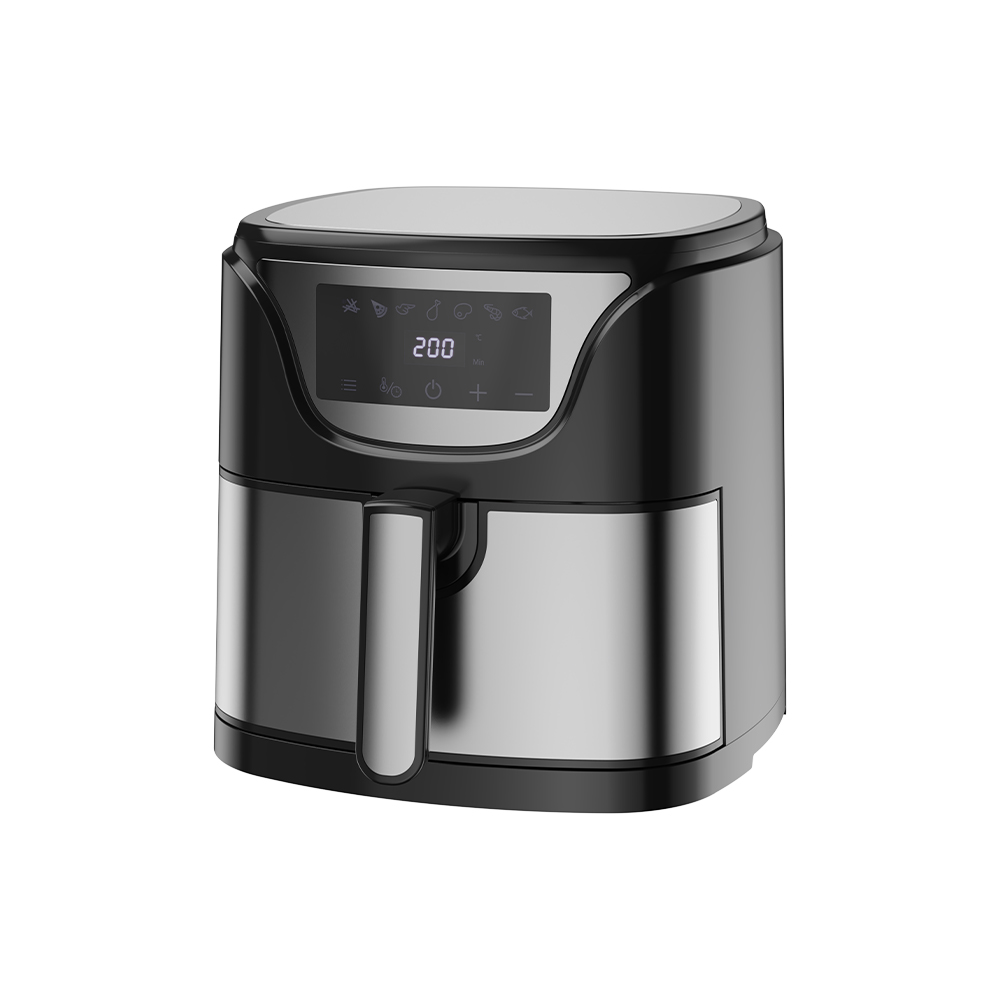
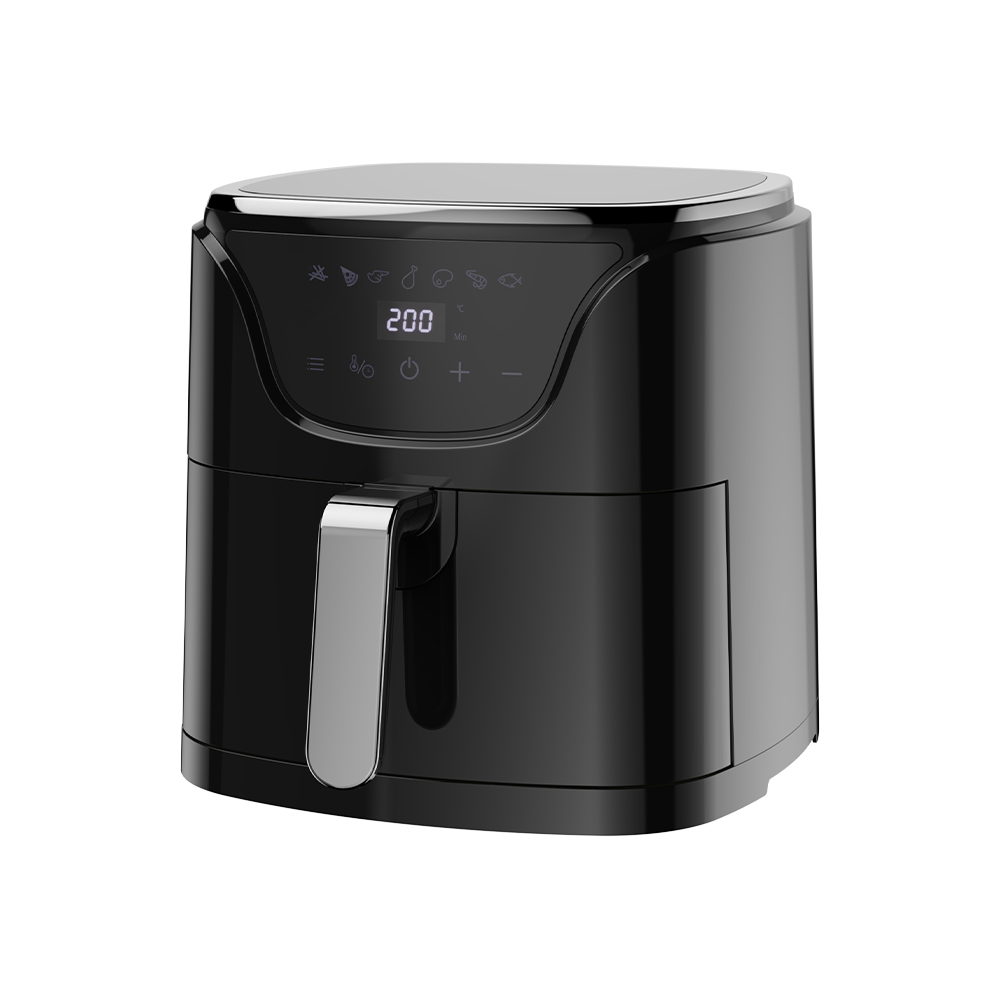
A single‑basket air fryer might list a footprint of 12 by 14 inches, compact enough to slide under an upper cabinet on paper. In practice, the vent exhaust on most basket‑style models sits on the back or top panel, meaning that base actually demands a working zone closer to 18 by 22 inches once side and rear breathing room is added.
Multi‑Compartment Models Compound the Problem
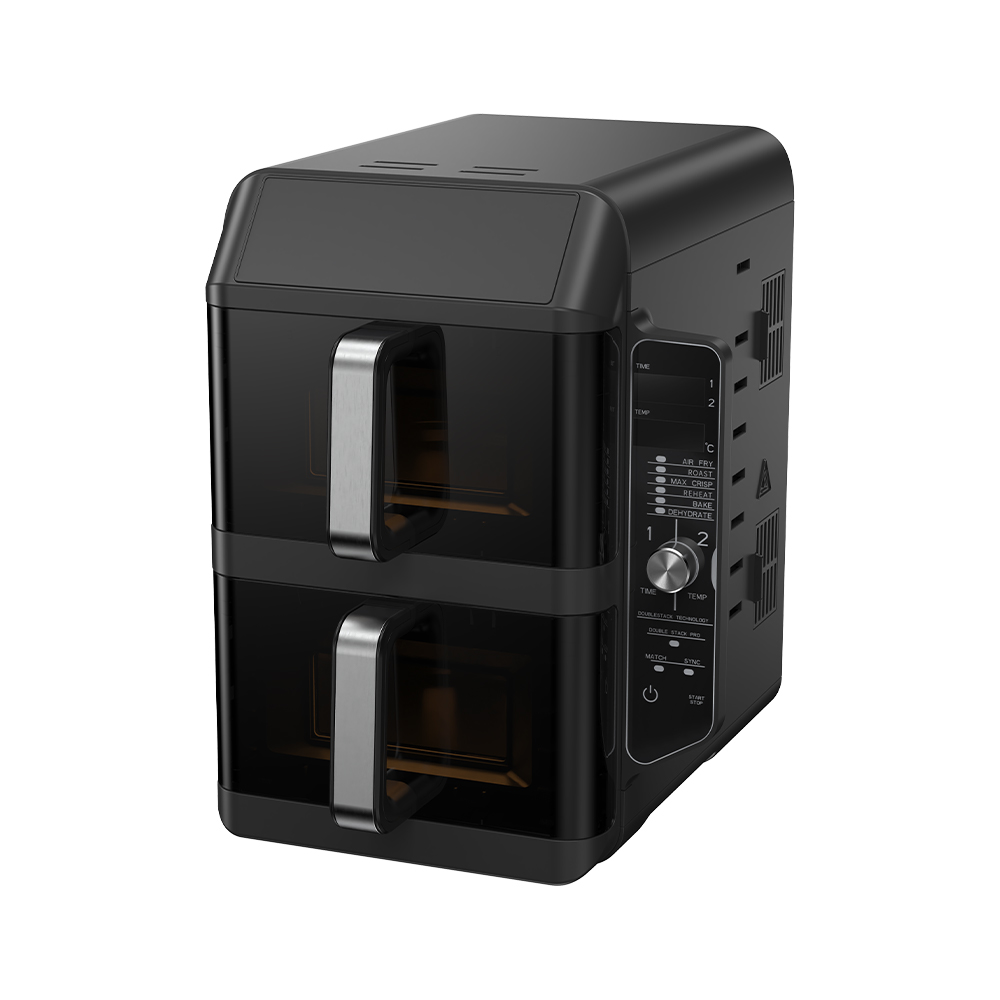
A two drawer air fryer solves the batch‑cooking limitation of single‑basket units by running two independent cooking zones side by side, but this design roughly doubles the base footprint compared to a standard model. Because each drawer has its own heating element and airflow path, a two drawer air fryer also tends to vent from both sides and the top simultaneously — the clearance requirement isn't just larger, it's distributed around more of the unit's perimeter.
air fryer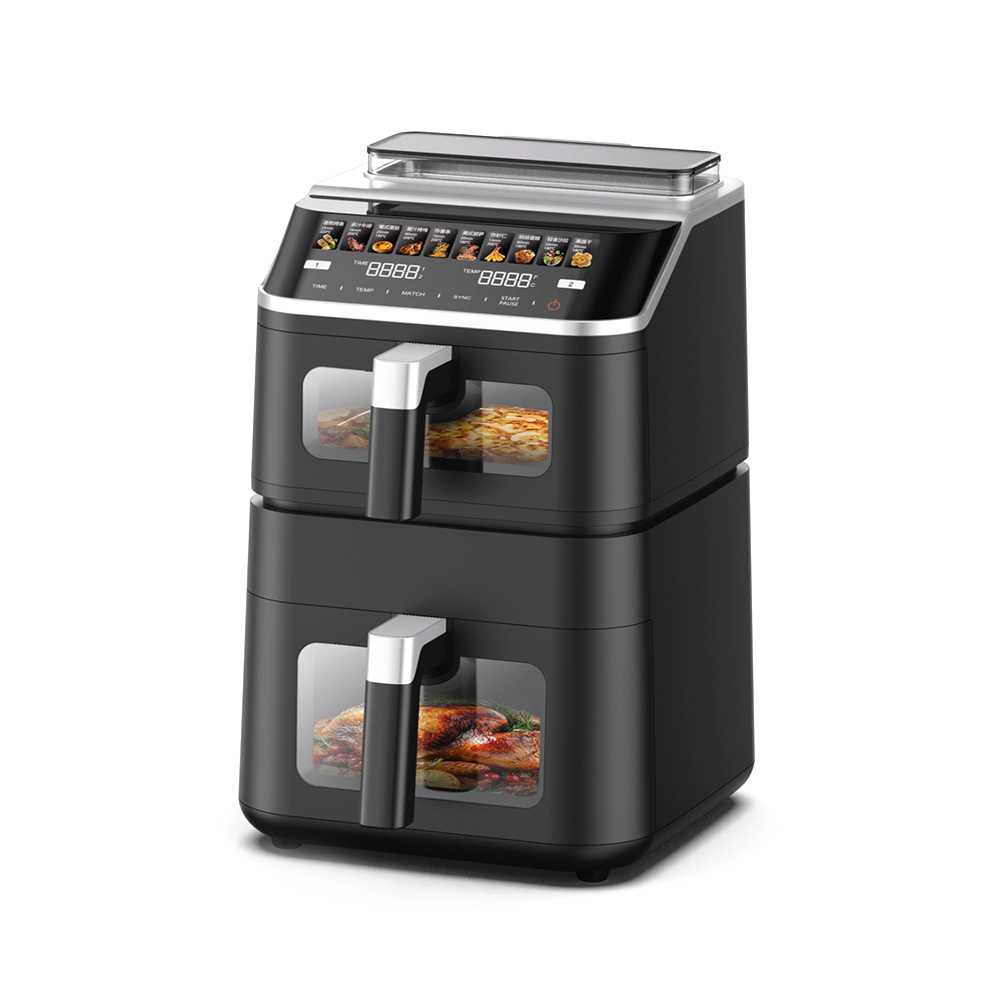
Ventilation Clearance, Explained in Practical Terms
Ventilation clearance is not a suggestion — it is a functional requirement tied directly to how the appliance's convection fan and heating coil operate. Restricting airflow can lower cooking performance, increase preheat time, and in poorly ventilated setups, trip a thermal cutoff switch designed to prevent overheating.
Manufacturer manuals commonly specify a minimum of 4 inches on the sides and rear — larger‑capacity units often recommend 5 to 6 inches.
Overhead Clearance
Overhead clearance is where most kitchens fail the test. Standard upper cabinets sit about 18 inches above the countertop, but an air fryer with its lid open, plus its own height, plus the recommended top clearance for heat dissipation, can require 22 to 26 inches of vertical space in total.
Placing an air fryer directly beneath a cabinet is one of the most common setup mistakes — it traps heat against the cabinet bottom, which over time can discolor laminate finishes or, in rare cases, pose a fire risk.
Front Clearance for the Basket or Drawer
Front space is often forgotten entirely. Pulling a hot basket or drawer straight out requires roughly 10 to 14 inches of unobstructed depth in front of the unit, especially for larger baskets that need to be tilted or shaken during cooking.
Real Counter Footprint by Air Fryer Type
The table below compares the listed base dimensions of common air fryer styles against the realistic working footprint once ventilation clearance is included.
| Air Fryer Type | Listed Base Footprint | Realistic Working Footprint | Overhead Clearance Needed |
|---|---|---|---|
| Compact single basket | 11 x 12 in | 17 x 18 in | 20 in |
| Standard single basket | 13 x 15 in | 19 x 22 in | 22 in |
| Two drawer air fryer | 17 x 15 in | 24 x 22 in | 24 in |
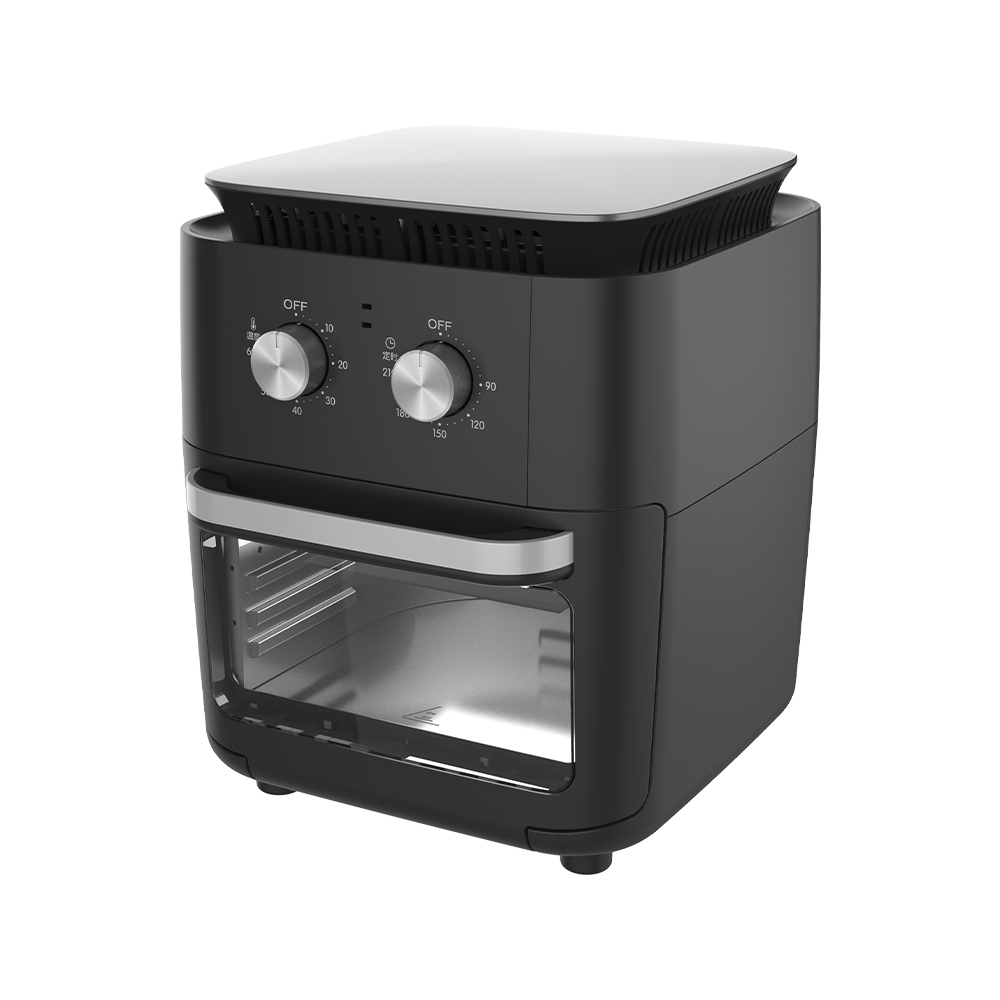
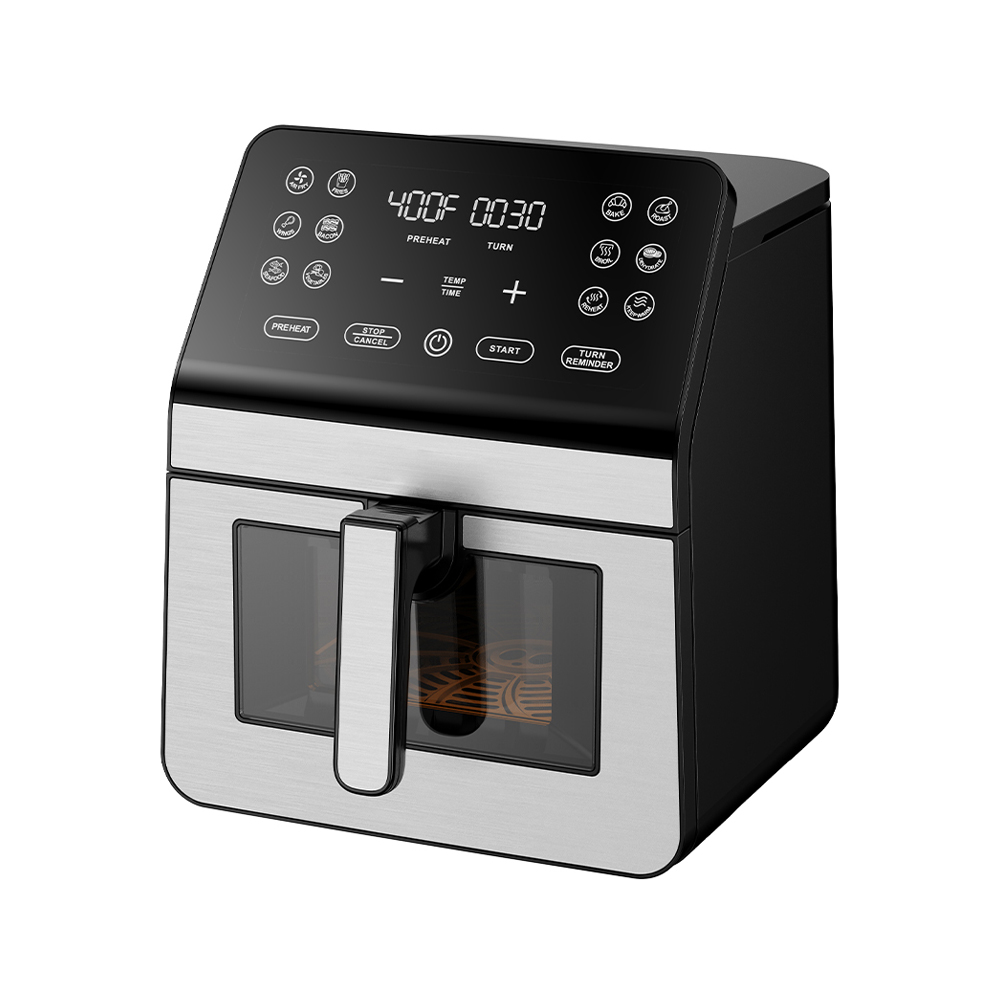
| Oven‑style basket combo | 17 x 16 in | 23 x 23 in | 26 in |
| Heritage air fryer | 12 x 13 in | 18 x 20 in | 20 in |
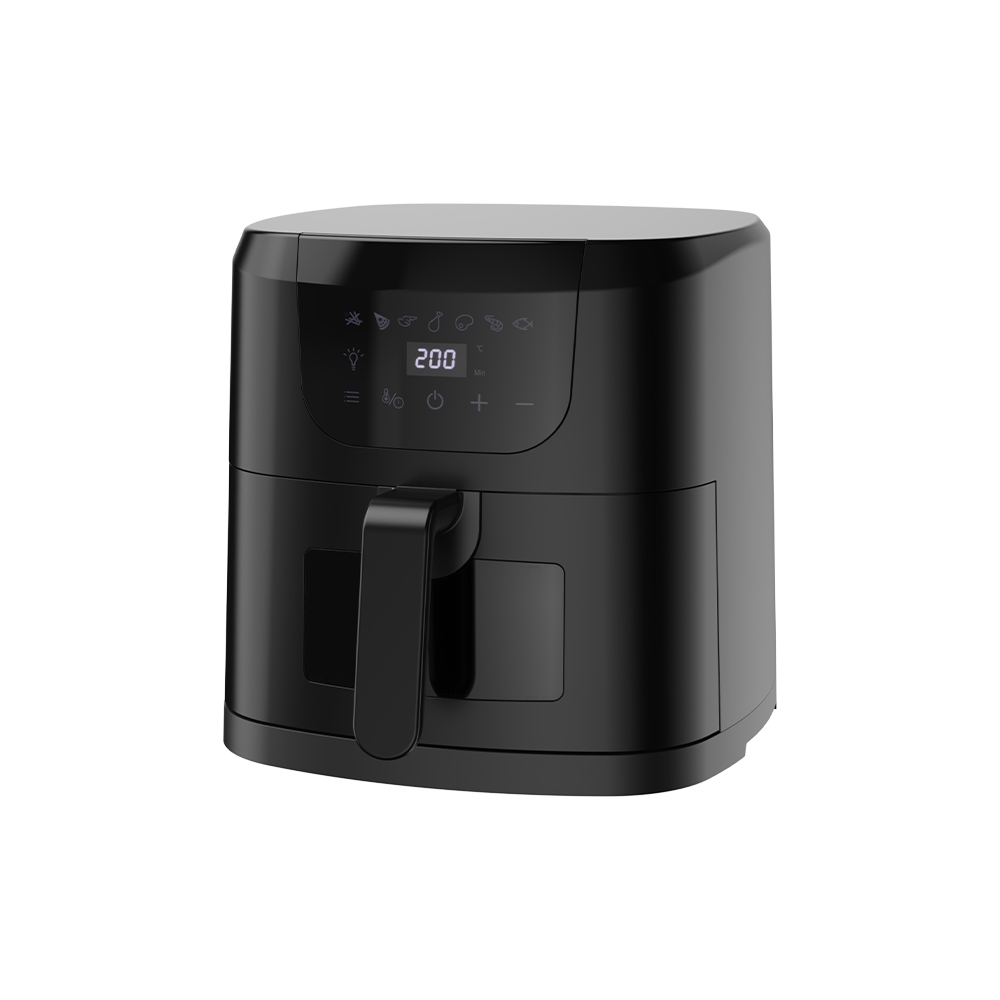
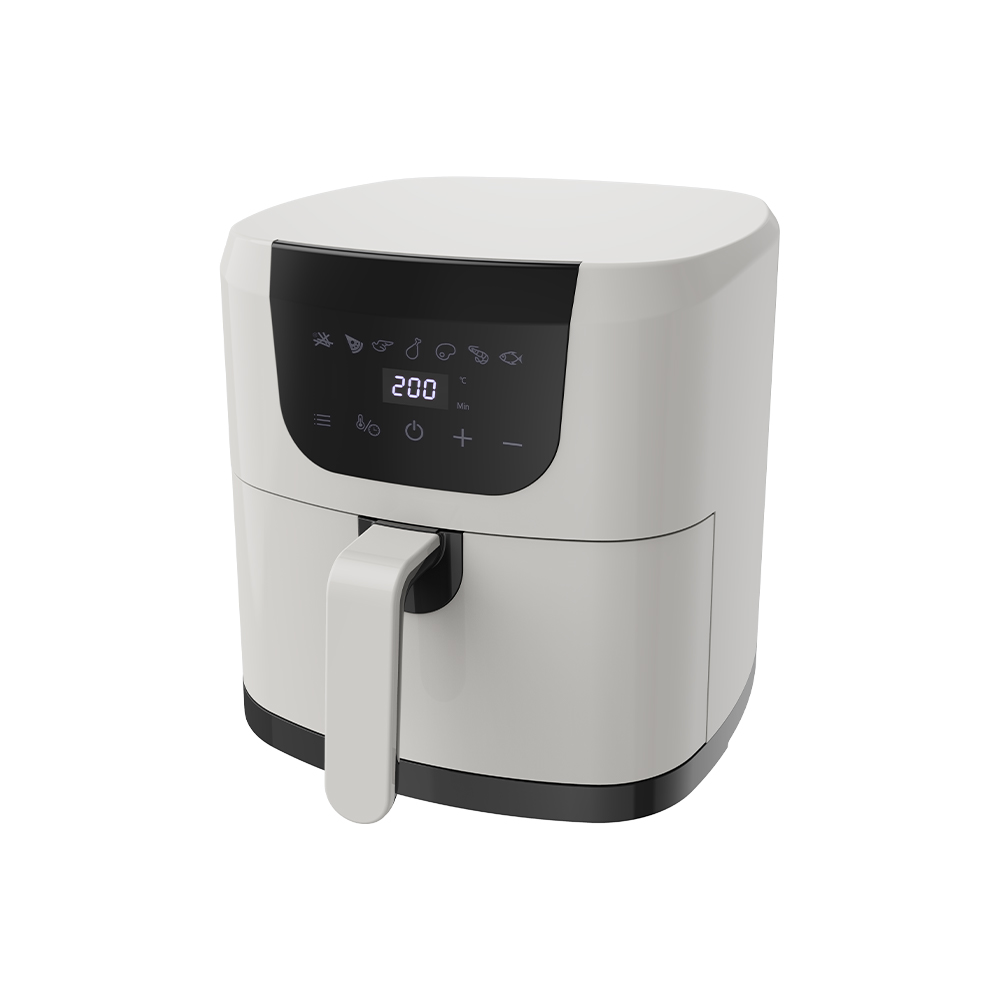
Interestingly, a heritage air fryer — the simpler, dial‑controlled basket style many households already associate with the original wave of countertop air frying — often has one of the smaller realistic footprints on this list. Because these units typically use a single round basket with straightforward top‑vent exhaust, the clearance math is more predictable than it is for multi‑zone or oven‑style machines.
How This Plays Out in Real Kitchens
On paper, clearance numbers are easy to dismiss as overly cautious manufacturer guidance. In practice, kitchen layout constraints make this one of the more disruptive downsides of owning an air fryer, particularly in smaller or galley‑style kitchens.
Upper Cabinet Heat Exposure
Running an air fryer directly under a cabinet without adequate top clearance can raise the interior cabinet temperature by a noticeable margin over a long cooking cycle. Repeated exposure over months of daily use can warp veneer or loosen adhesive on laminate cabinet bottoms.
A two drawer air fryer is popular precisely because it lets users cook two different foods at two different temperatures at once, but its wider clearance needs mean it frequently competes for the same counter zone as a coffee maker, toaster, or stand mixer.
Storage Between Uses
Because most air fryers are too tall and too heat‑sensitive to store fully enclosed in a cabinet immediately after use, many owners end up leaving the unit out permanently rather than moving it in and out for every meal. This turns a minor purchase‑time consideration into a daily reality: a chunk of prime counter real estate is effectively reserved for the appliance, whether it's cooking or not.
Practical Ways to Work Around Limited Counter Space
The counter space downside doesn't have to rule out an air fryer purchase — it just requires planning before the unit arrives rather than after.
- Measure the intended spot using the realistic working footprint, not the listed base dimensions, and add at least 4 inches on every open side.
- Check the vertical space to the underside of any cabinet above the spot, confirming it meets the manufacturer's top clearance recommendation.
- Consider a rolling cart or slide‑out shelf so the unit can be pulled fully into the open only during cooking.
- If counter space is genuinely tight, a compact single‑basket or heritage air fryer style unit will generally need less total clearance than a two‑zone model.
- Avoid placing the unit directly against a wall corner, since corners restrict airflow on two sides at once and intensify heat buildup.
For households that regularly cook two dishes at different temperatures, the added footprint of a two drawer air fryer is often worth the trade‑off — as long as it's chosen with a tape measure, not a guess.
Never operate an air fryer wedged into a corner or directly under a cabinet with no measured clearance — restricted airflow around the exhaust vent is a genuine overheating and fire‑risk concern, not just a performance issue.
Key Takeaway Before You Buy
The counter space downside of air fryers is real, but manageable once understood correctly. The base footprint printed on a product page is only part of the picture — the true space requirement includes 4 to 6 inches of side and rear clearance, 8 to 12 inches of top clearance, and enough front depth to safely remove a hot basket or drawer. Multi‑zone models like a two drawer air fryer need more total room than compact single‑basket or heritage air fryer styles, so matching the unit to the kitchen's actual available space — measured with ventilation in mind — is the difference between an appliance that gets used daily and one that ends up shoved in a closet within a month.
-
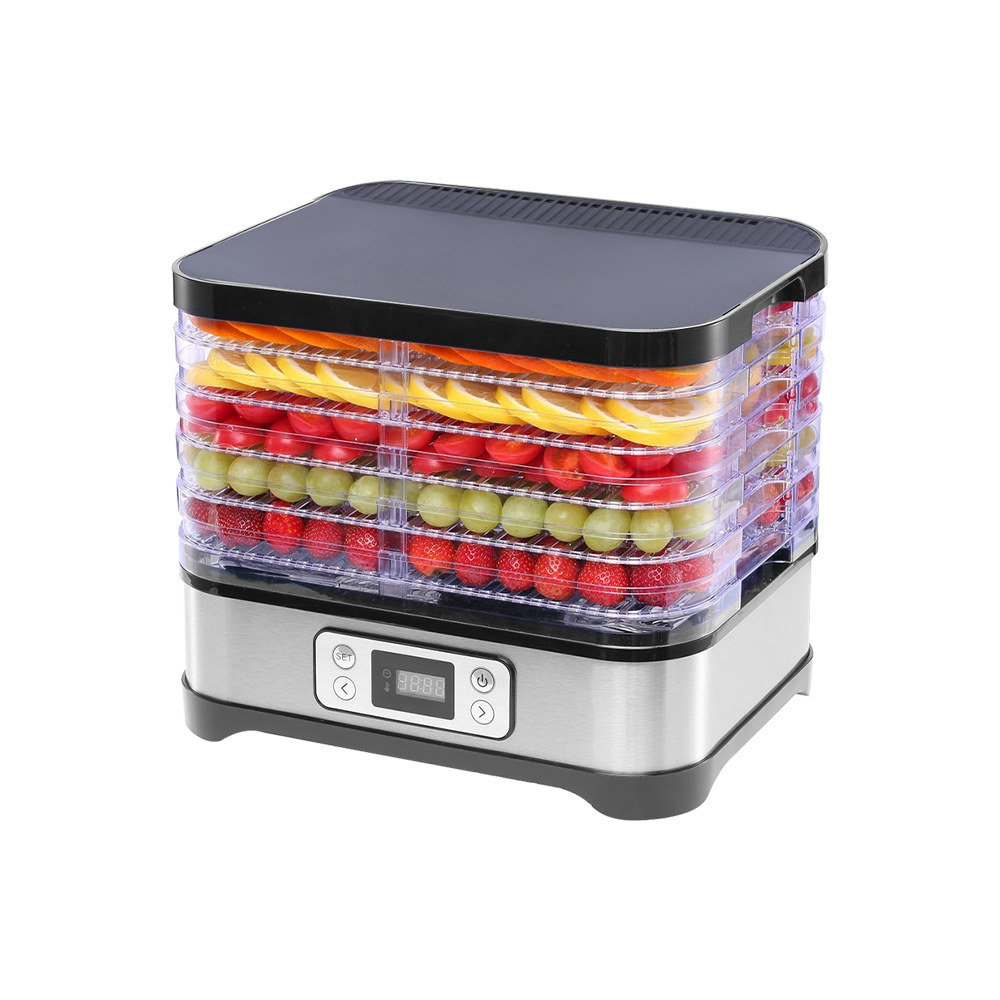 Food Dehydrator FD-811L Stainless Steel Food Dehydrator
+86-13567417935
-
E-MAIL
Lisa@vasion.com.cn
-
ADDRESS
No.3 Sitang Jiang Road, Gaoqiao Vllage, Xinpu Town, Cixi City, Zhejiang Province, PRC. China.
Copyright © Ningbo Vasion Electric Appliance Co. ,Ltd.All Rights Reserved.
Custom Small Kitchen Appliances Manufacturers

VASION ELECTRIC
